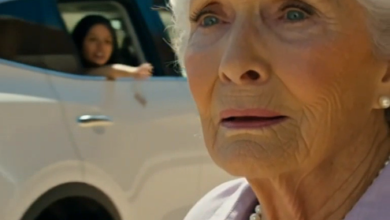
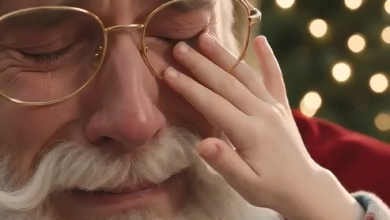
Part 2: The Elder-Care Mother Looked Down On by Her Relatives — Until an Old Woman’s Wedding Toast Left Everyone Silent
Three hours earlier, Margaret had stood in her small apartment with Emily’s wedding invitation on the kitchen table and her dress hanging on the pantry door.
It was not expensive, but it was beautiful.
Soft blue. Long sleeves. A modest neckline. The kind of dress she had tried on six times in front of the bathroom mirror because she could hardly believe she owned something so nice.
Emily had chosen it herself.
“You’ll look lovely, Mom,” she had said, brushing lint from the sleeve. “I want you in the front row.”
Margaret had smiled then, but not fully.
For twenty-seven years, she had worked as a certified caregiver for older adults. She bathed people whose own children rarely visited. She changed sheets after fevers. She learned how each person took tea, which hymns calmed them, which names they called out in the dark.
To her family, it was not noble work.
It was “wiping old people.”
That was Vivian’s phrase, spoken at Thanksgiving with a laugh and a glass of white wine.
Emily’s father, Richard, had divorced Margaret twelve years earlier, after saying he was tired of always smelling disinfectant in the laundry room. He had remarried into money, into polished shoes and weekend golf, into a house where nobody left pill organizers on the counter.
Emily had grown up between those two worlds.
At her father’s house, she had a bedroom with a chandelier.
At Margaret’s apartment, she had a fold-out sofa, vegetable soup, and a mother who fell asleep with her work badge still clipped to her collar.
Margaret never complained.
That made people complain for her.
At noon on the wedding day, Margaret was ready. Her dress was zipped. Her hair was curled. She had even dabbed perfume behind her ears, the tiny bottle Emily had given her the Christmas she turned sixteen.
Then her phone rang.
The screen showed: Rose Haven Memory Care.
Margaret did not answer right away.
She looked at the dress. She looked at the clock. The ceremony started at two.
Then she answered.
A nurse named Paula was crying.
“Margaret, I’m sorry,” she said. “It’s Mrs. Whitaker. She won’t get in the transport van. She keeps asking for you.”
Margaret closed her eyes.
Eleanor Whitaker was ninety-one, widowed, sharp one day and lost the next. She had once taught piano at the state university and still tapped rhythms on tabletops when words escaped her.
She was also the old woman Emily had invited to the wedding without telling most of the family.
Years earlier, when Emily was in middle school, Margaret had taken her to Rose Haven after school because childcare cost too much. Emily used to sit in the activity room doing homework while Margaret worked. Eleanor had helped her memorize spelling words, taught her how to hold her shoulders when playing piano, and told her, “A young lady may be poor, but she never has to be small.”
Emily had loved her.
But on the morning of the wedding, Eleanor had panicked.
She did not remember the wedding.
She remembered a different day.
Her own daughter’s wedding, forty years earlier, the one she had missed after a stroke put her in the hospital. Memory had folded time until grief became present tense again.
“She thinks she’s late for Caroline,” Paula said. “She keeps saying no mother should miss her daughter’s wedding.”
Margaret’s hand went to the pantry door where the blue dress hung.
“What did her son say?” Margaret asked.
There was a pause.
“He said not to force her. He’s in Florida.”
Margaret looked at the clock again.
Then she said, “Give me twenty minutes.”
That was the first twist nobody in the ballroom knew.
The second came when Margaret arrived at Rose Haven in her blue dress and found Eleanor sitting on the floor outside her room, clutching an old white towel like a child with a blanket.
Eleanor had refused her formal shawl. She had refused shoes. She had refused the transport chair.
But when she saw Margaret, her frightened eyes cleared.
“Meg,” she whispered, using the nickname she had given Margaret years ago. “Did I ruin it?”
“No,” Margaret said, kneeling carefully so her dress would not tear. “We still have time.”
Eleanor touched Margaret’s sleeve.
“You look like a mother today.”
Margaret swallowed hard.
For one fragile moment, she almost stayed dressed.
Then Eleanor’s breathing changed. Her hands began trembling. She gripped the towel and whispered, “I spilled coffee on Caroline’s veil. She’ll hate me. I always ruin beautiful things.”
Margaret knew that kind of panic. She had seen it in dozens of rooms, under soft lamps and hospital lights. Shame could make the elderly smaller than children.
So Margaret did what she had done for years.
She took off her pretty blue dress.
Under it, she wore her clean navy caregiver uniform, because habit had taught her to prepare for accidents, spills, and emergencies.
She wrapped Eleanor’s shoulders with the towel.
She put on the old woman’s shoes.
She sat with her on the edge of the bed until Eleanor’s breathing slowed.
By the time the transport van pulled away from Rose Haven, Margaret had missed the ceremony.
By the time she reached the reception, her relatives had already decided what they were seeing.
A woman who had chosen work over her daughter.
A mother who could not rise above her station.
A caregiver who did not know how to belong in a ballroom.
And Margaret, seeing Emily’s face across the room, understood all of it.
She understood the hurt.
She understood the humiliation.
She understood that sometimes love arrives too late to look like love.
So she did not defend herself.
She walked to Eleanor first.
Because Eleanor was shaking again.
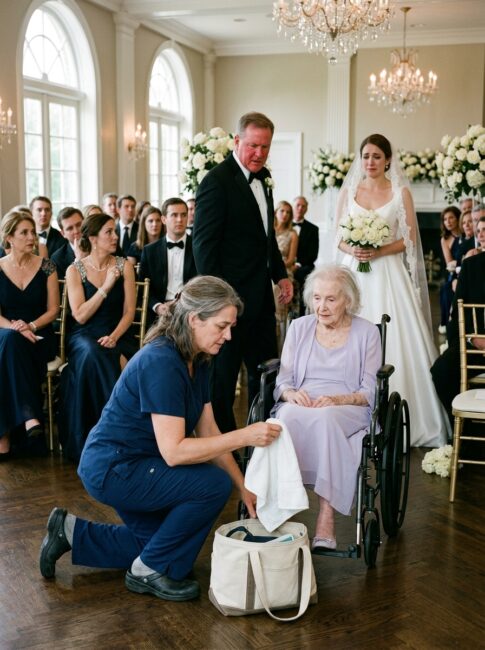
The reception tried to recover.
The band started a soft jazz number, though the trumpet player kept glancing toward the corner. Waiters moved through the tables with salads. People pretended not to watch Margaret unfold the white towel across Eleanor’s lap.
Emily did not come over.
That hurt Margaret more than Vivian’s whispers.
From the head table, Emily sat stiffly beside her new husband, Daniel. Her bouquet lay untouched near her plate. Every few seconds, her eyes drifted toward the back corner, then away again.
Richard leaned toward Margaret during the salad course.
“You embarrassed her,” he said quietly.
Margaret looked up.
He wore a tuxedo that fit perfectly and a watch that cost more than Margaret’s car.
“I know,” she said.
That answer seemed to irritate him.
“You could have changed.”
“I could not.”
“You always have an excuse.”
Margaret’s hands tightened around the towel.
Eleanor, half lost in her own world, suddenly lifted her chin and said, “She never does.”
Richard blinked.
The old woman looked at him for a long second, then forgot what she had meant and turned back toward the dance floor.
Margaret lowered her eyes.
There was another thing nobody knew.
Margaret had paid for Emily’s wedding dress.
Not Richard.
Not Vivian.
Not the wealthy relatives who had spent months discussing centerpieces as if flower height could determine a marriage.
Emily had fallen in love with a dress far outside the budget. She had tried to pretend she did not care, but Margaret knew the face her daughter made when giving up something beautiful.
So Margaret took extra night shifts at Rose Haven.
For seven months, she slept in two-hour pieces. She cared for Eleanor through sundown confusion, held Mr. Alvarez through pneumonia, and sat beside a retired mailman who no longer recognized his own hands.
When the dress shop called to say the balance was paid, Emily cried into the phone.
“Dad finally helped?” she asked.
Margaret had paused.
Then she said, “Something like that.”
That was the third twist.
The fourth sat in Margaret’s tote.
A small envelope with a check from Eleanor Whitaker.
Months earlier, on a lucid afternoon, Eleanor had asked Margaret to bring her stationery.
“I want to give Emily a wedding gift,” Eleanor said.
“You don’t have to do that.”
“I know,” Eleanor replied. “That is why it counts.”
Margaret had expected twenty dollars.
Eleanor wrote a check for ten thousand.
Margaret refused to take it.
Eleanor insisted.
“It is not charity,” she said. “That girl used to read to me when my eyes got tired. She played piano badly but bravely. She made this place less quiet.”
Margaret had kept the envelope safe, planning to give it privately after the wedding. She knew Vivian would call it strange. She knew Richard would call it inappropriate. She knew people with money often grew suspicious when kindness came from those they considered beneath them.
So Margaret kept it in the tote.
Beside tissues.
Beside hand cream.
Beside the white towel that now looked absurd under chandelier light.
The speeches began after dinner.
Daniel’s best man made a joke about college. Vivian gave a polished toast about family legacy and “the standards we pass on.” Richard spoke about providing Emily with every opportunity, every piano lesson, every trip, every door that had opened because someone cared enough to invest in her future.
Margaret sat very still.
Emily’s face changed slightly at the word “piano.”
She looked toward Eleanor.
The old woman was awake now.
Not fully.
But enough.
When the microphone was offered for final words, the wedding planner began to move past the back corner.
Eleanor lifted one thin hand.
“I would like to speak,” she said.
The planner hesitated.
Vivian’s eyebrows rose.
Richard looked alarmed.
Margaret leaned close. “Eleanor, you do not have to.”
The old woman turned to her.
“I know,” she said.
That was the first clear sentence she had spoken all evening.
Daniel, to his credit, stood and walked the microphone over himself.
Emily watched him do it.
The room softened into curiosity, though not kindness yet.
Eleanor held the microphone with both hands. Her fingers were bent with arthritis, but her voice, when it came, carried the old authority of a woman who had once commanded lecture halls full of restless students.
“My name is Eleanor Whitaker,” she said. “I taught music for forty-two years. I have forgotten many things. I have not forgotten Margaret Ellis.”
The room stilled.
Margaret lowered her head.
Eleanor continued slowly, each word placed with care.
“When my husband died, I became angry. When my daughter stopped visiting because grief made us both strangers, I became cruel. I threw food. I broke a picture frame. I told this woman to get out of my room.”
A murmur moved through the guests.
“She came back with warm soup,” Eleanor said. “Not because I deserved it. Because that was who she was.”
Emily’s lips parted.
Eleanor turned the microphone slightly toward the head table.
“I know some of you think caring for old people is small work. You are wrong.”
No one moved.
“It is not small to wash the hands that once held babies. It is not small to remember how someone takes tea when their own children forget to call. It is not small to sit in the dark with a woman who thinks she missed her daughter’s wedding.”
Margaret pressed her fingers to her mouth.
Richard’s expression changed, but pride held his face in place.
Eleanor looked at Emily.
“You were a little girl when your mother brought you to Rose Haven. You sat under the activity table with your homework because your mother could not afford a babysitter. You thought nobody noticed.”
Emily’s eyes filled.
“I noticed,” Eleanor said. “You sounded out your spelling words while your mother changed my sheets. You played piano on the old upright near the window. You missed notes, but you kept going.”
A few guests smiled through wet eyes.
“Your mother told everyone your father paid for the piano lessons,” Eleanor said.
The ballroom tightened.
Emily looked at Richard.
Richard looked down.
“But I remember the jar,” Eleanor continued. “The coffee jar in the medication room. Margaret put cash in it every Friday. Five dollars. Eight dollars. Sometimes quarters. She said it was for her daughter’s music.”
Emily covered her mouth.
Margaret shook her head once, barely.
Please, her face seemed to say.
But Eleanor had spent too many years being quiet in rooms where others decided what mattered.
She lifted the envelope from Margaret’s tote.
“I also know your mother paid for your wedding dress with night shifts,” Eleanor said. “Because I was awake for most of them.”
The first sound came from a bridesmaid.
A soft, broken breath.
Emily stood.
Her chair scraped against the polished floor.
Eleanor held the envelope toward her.
“This is not from a rich old woman,” she said. “It is from a grateful one. Your mother taught me that being cared for is not the same as being pitied. She gave me dignity when I had misplaced my own.”
Emily stepped down from the head table.
The train of her dress moved behind her like water.
Halfway across the room, she stopped in front of Margaret.
For a second, mother and daughter looked at each other across everything the day had broken.
Then Emily whispered, “You missed my vows.”
Margaret’s face crumpled.
“I know.”
Emily’s tears spilled over.
“And you were still taking care of someone else.”
Margaret nodded, unable to speak.
Emily looked at the towel, the uniform, the clogs, the tired hands in Margaret’s lap.
Then she did the thing nobody expected.
She knelt on the ballroom floor in her wedding dress.
Right there, in front of the family table.
In front of Vivian.
In front of Richard.
In front of every person who had mistaken service for shame.
Emily placed her forehead against her mother’s knees and cried the way grown daughters cry when they finally understand the cost of being loved.
Margaret bent over her, both hands trembling as she touched the veil.
“I wanted to be beautiful for you,” Margaret whispered.
Emily looked up.
“You were.”
The room did not applaud at first.
It was better than applause.
It was silence without judgment.
Then Daniel knelt beside them and placed one hand on Margaret’s shoulder.
“Mrs. Ellis,” he said softly, “would you sit at our table now?”
Margaret looked toward Eleanor.
The old woman nodded once, pleased and exhausted.
“Go on, Meg,” she said. “A mother should not miss the whole wedding.”
They moved Margaret’s chair to the center of the head table.
Not at the end.
Not behind a floral arrangement.
Beside Emily.
Vivian tried once to speak to her, but the words came out thin and useless. She settled for touching Margaret’s arm, a gesture too small to be an apology and too late to be comfort.
Richard stood near the bar for a long time.
Later, he came to Emily and said he had not known about the dress. Emily only looked at him with a sadness that did not accuse him, which somehow made it worse.
“I should have asked,” he said.
Emily glanced toward her mother, who was cutting Eleanor’s chicken into smaller pieces because the old woman had forgotten where she was again.
“Yes,” Emily said. “You should have.”
The dancing resumed, but differently.
Guests came by Margaret’s chair, one by one. Some thanked her for her work. Some told clumsy stories about their own aging parents. One woman admitted she had placed her mother in care and had not visited in six weeks.
Margaret did not shame her.
She only said, “Go tomorrow.”
The woman nodded as if she had been handed a map.
Near the end of the night, Emily asked the band to play an old song Eleanor used to teach her on the piano. The melody moved slowly through the ballroom, gentle enough for memory to follow.
Daniel pushed Eleanor’s wheelchair to the edge of the dance floor.
Emily stood in front of her.
“Do you remember this one?” she asked.
Eleanor listened, her face turned toward the music.
Then her fingers lifted from the blanket and began tapping the rhythm on the white towel.
Margaret watched from a few feet away.
Her uniform was wrinkled now. Her clogs were scuffed from kneeling. Her hair had loosened around her temples. She looked nothing like the mother-of-the-bride pictures Vivian had imagined.
She looked tired.
She looked human.
She looked like someone who had spent a lifetime entering rooms after the beautiful parts were over, cleaning what others left behind, and still finding tenderness there.
Emily crossed the dance floor and held out her hand.
“Dance with me, Mom.”
Margaret laughed once, embarrassed.
“I am not dressed for it.”
Emily glanced around the ballroom, then back at the woman who had carried her childhood in grocery bags and night shifts.
“Yes, you are.”
So Margaret danced with her daughter in navy scrubs beneath crystal chandeliers.
At first, she moved carefully, one hand on Emily’s waist, the other holding Emily’s fingers as if they were still small. Then Emily rested her head on her mother’s shoulder, and Margaret closed her eyes.
The photographer lifted his camera.
No one stopped him.
The picture would later become Emily’s favorite from the wedding.
Not the kiss.
Not the cake.
Not the posed family portrait where everyone stood straight and smiled correctly.
It was the photo of her mother in caregiver scrubs, holding her in the middle of a country club ballroom, with an old woman in a wheelchair tapping music into a white towel behind them.
Weeks later, Emily framed a copy and placed it in her living room.
At the bottom, she wrote one sentence in pencil before sliding it behind the glass.
My mother came dressed as who she really was.
Margaret never talked much about that night. When people at Rose Haven asked how the wedding went, she smiled and said it was lovely.
Eleanor kept the white towel folded on her lap for months afterward. Some days she remembered the speech. Some days she did not.
But whenever Emily visited, Eleanor would touch the wedding ring on her finger and whisper, “Your mother brought me.”
And Emily would answer the same way every time.
“Yes,” she said. “She brought all of us.”
Follow this page for more heartfelt stories about the quiet people we sometimes overlook, and the moments that reveal who they truly are.