Paid for a Biker’s Breakfast Because He Was Short Three Dollars—Then the Diner Owner Called Me Back Like Something Terrible Had Happened
The most ordinary thing I did that Tuesday morning was cover a stranger’s breakfast when he came up three dollars short, but the strange part was the way the biker stared at the crumpled receipt in his hand—and three days later, the diner owner called me sounding so shaken I thought someone had died.
I was standing in my kitchen when my phone rang.
The number was familiar, but not familiar enough for me to smile at it. Just familiar enough to make my stomach tighten. It was Marlene from Harlow’s Diner, the little place off Route 19 where I stopped twice a week on my way to work.
When I answered, she didn’t even say hello.
She said, “Can you come by this morning? Please. I need to show you something.”
Not tell me.
Show me.
I remember looking at the sink full of coffee cups, the lunch container I still hadn’t packed, the school permission slip sitting under a magnet on the fridge. My life was not built for urgent calls. Not anymore. Urgent usually meant expensive. Or bad. Or both.
I asked her what was wrong.
There was a pause on the line. Then she said, quieter this time, “It’s about the biker. The one whose meal you paid for.”
That was when I stopped breathing for a second.
Because I hadn’t thought much about that man since he left.
And suddenly, I couldn’t stop thinking about the way he had folded that receipt like it meant something.
At that point in my life, I was thirty-nine, divorced for four years, raising a twelve-year-old son who had opinions about everything except the things that mattered, and working the early office shift at a physical therapy clinic in our town outside Pittsburgh.
My days ran on numbers.
Alarm at 5:35.
Coffee at 5:42.
Wake up Noah at 6:10 the first time, 6:18 the second, and 6:26 if I wanted him vertical before the bus came.
Gas tank never below a quarter if I could help it.
Grocery budget every Friday, written in blue pen on the back of an old bank envelope.
I knew what was in my checking account most days down to the dollar.
Not because I liked living that way. Because I had to.
People talk about being “tight on money” like it’s one bad month. For me, it was a way of moving through the world. You noticed everything. The extra charge on a bill. The cracked sole on your son’s sneakers. The difference between buying strawberries because they looked good and not buying them because ground beef was already too high.
Harlow’s Diner was one of my tiny allowances to myself.
Nothing fancy. Red vinyl booths with a few old splits in the seams. A bell over the front door that rang too sharply. Coffee that tasted slightly burned in a way I had somehow started finding comforting. Marlene had owned the place for nearly twenty years. She knew which customers wanted small talk and which ones just wanted eggs and silence. I was in the second group most mornings.
That Tuesday had already started badly.
Noah had missed the bus because he couldn’t find his science folder, which turned out to be under the couch cushions. I had to drive him to school, which made me late. Then I realized I’d left my clinic badge at home and had to turn around again. By the time I pulled into Harlow’s parking lot, I had exactly eleven minutes to get coffee, something quick to go, and salvage what was left of my mood.
I remember checking my wallet before I walked in.
Two twenties.
One five.
Three singles.
A pharmacy receipt.
A faded picture-booth strip of Noah at age seven making that ridiculous crossed-eye face he used to do.
That’s the kind of detail you remember later, when a day turns into a story.
Back then, it was just a Tuesday. Cold enough for my breath to show. Gray sky. Salt still crusted at the edges of the parking lot from an old snow. The kind of morning where everyone looked a little tired and nobody wanted surprises.
Then I pushed open the diner door and heard the bell.
And I got one anyway.
He was standing at the register when I walked in.
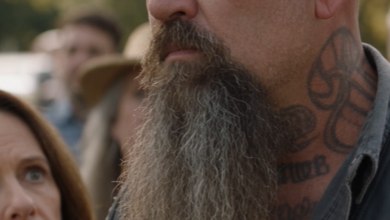
Big man. Mid-forties, maybe older. Broad shoulders under a faded black thermal shirt, leather vest over it, the kind that had gone soft from years of wear rather than fashion. Gray threaded through his beard. Not wild-looking. Just worn. Like the world had sanded him down in places and he’d kept going.
His helmet sat on the counter beside him.
Black, scratched, with one thin white stripe across the top.
That was the first object I noticed.
The second was the receipt in his hand.
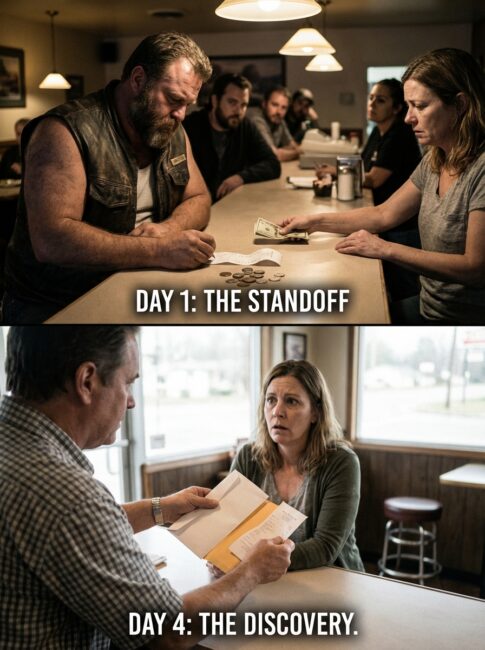
Marlene stood across from him, not angry exactly, but guarded. Her waitress, Tasha, had stopped pouring coffee at a nearby table and was pretending not to listen. Two men in work jackets by the window were listening openly.
“I said put the toast back,” the biker told Marlene.
His voice wasn’t loud. That made it carry more.
“I’m not taking charity.”
The room shifted at that word.
Charity.
Marlene crossed her arms. “No one said charity. You ordered it, I rang it up. You’re short, that’s all.”
He reached into his jeans pocket again, slow this time, and pulled out coins. Quarters, nickels, one dime. He counted them without looking up. I noticed his hands then—rough knuckles, grease at the edges of his nails like he worked with engines, and a pale scar across one thumb. He got to the end of the coins and stopped.
Still short.
Three dollars and twelve cents, if I remember right.
One of the men by the window muttered something about people needing to know what they could afford before they sat down. Not loud enough to own it. Loud enough to be heard.
The biker heard it.
He didn’t turn around. Didn’t snap back. He just stood there, staring at the receipt like he was trying to decide which part of himself he was willing to give up in front of strangers.
Then Marlene reached for the plate behind the counter. Two eggs, rye toast, bacon, and the side of hash browns he hadn’t touched much.
“I can take the bacon off,” she said. “And the toast. That’ll cover most of it.”
Something changed in his face.
Not anger.
Something worse. Pride bending under too much weight.
“I already ate it,” he said quietly.
That line stayed with me.
Because it wasn’t really about breakfast.
I don’t know why I spoke. Maybe because I was tired. Maybe because I knew exactly what it felt like to have a small amount of money suddenly become the largest thing in a room.
I stepped up beside him and put four dollars on the counter.
“Just add mine in too,” I told Marlene. “It’s fine.”
He turned then and looked at me directly for the first time.
His eyes were lighter than I expected. Not hard. Just careful.
For one second, I thought he might get angry. Or insulted. Or shove the money back toward me and make the whole thing worse.
Instead he said, “No.”
Just that.
A flat, immediate no.
So now everyone was looking at me too.
I should have backed off. I know that. But something in me stiffened. Maybe because I hated the audience. Maybe because I hated the silence more.
“It’s four dollars,” I said. “Not a mortgage.”
One of the men laughed under his breath.
The biker glanced toward the sound, then back at me. His jaw worked once. Then he looked at the helmet on the counter, then at the receipt in his hand, like both things belonged to a version of his life he no longer fully trusted.
Finally, he said, “I’ll pay you back.”
I almost told him not to worry about it.
But he said it in such a specific way, so steady and serious, that I just nodded.
“Okay,” I said. “Sure.”
Marlene took the cash. The room loosened. Tasha went back to her coffee pot. The men by the window returned to their own plates, disappointed that nothing uglier had happened.
The biker picked up his helmet, folded the receipt once, then once again, and slid it carefully into the inside pocket of his vest.
That part struck me as odd.
Most people throw receipts away.
He treated his like a letter.
Then, instead of leaving right away, he sat back down in the last booth near the window and finished the meal he’d almost had taken from him. Slowly. Very slowly. Bite by bite, as if he were doing more than eating. As if he were trying to decide something.
He never looked at his phone.
Never asked for more coffee.
Never once glanced toward me again.
When I left, he was still there with that folded receipt beside his hand and his helmet on the seat next to him.
And I remember thinking, as I pushed through the door into the cold, that I had either helped a decent man through a bad morning—
or stepped into something I didn’t understand at all.
I didn’t go back to Harlow’s the next day.
Not because of him.
Because life doesn’t pause long enough for one awkward moment to mean anything right away.
Wednesday was insurance calls, a broken copier at the clinic, and Noah asking me at dinner if we could “maybe not have chicken again.” Thursday was laundry that never fully dried and a text from my ex about splitting a school fee that I knew would turn into a longer conversation I didn’t have time for.
But still—
That breakfast stayed with me.
Not the money.
The way he said, I’ll pay you back.
People say that all the time. They don’t mean it.
He meant it.
I found myself replaying small things.
The way he counted coins twice, even though the result didn’t change.
The way he didn’t rush out once the situation was resolved.
The way he ate like someone measuring time instead of filling space.
And the receipt.
Folded carefully.
That part didn’t fit.
On Thursday morning, I drove past the diner without stopping. I told myself I was running late. Which was true. But I also didn’t feel like walking into a room that might still hold the echo of that moment.
By Friday, I gave in.
Routine has gravity.
I parked in the same spot, noticed the same salt lines along the asphalt, the same crooked sign in the window advertising homemade pie. Inside, the bell rang exactly the same way it always did.
Marlene looked up when I came in.
Not unusual.
But she held my gaze a second longer than usual.
“Morning,” she said.
“Morning.”
I slid into my booth. Ordered coffee. Nothing else.
Tasha brought it over, set it down, then hesitated.
“You were here Tuesday, right?” she asked.
I nodded.
“With the biker.”
The word landed differently now.
“Yeah.”
She glanced toward the counter, where Marlene was wiping something that didn’t need wiping.
“He came back,” Tasha said quietly.
That was twist number one.
I straightened slightly. “When?”
“Later that day. Maybe an hour after you left.”
That surprised me.
“He pay you back?” I asked, trying to keep it light.
Tasha shook her head. “No. That’s the weird part.”
Twist two.
“What do you mean?”
Before she could answer, Marlene called her name a little too sharply.
Tasha gave me a look that said I shouldn’t be saying this, then picked up the coffee pot and walked away.
I sat there, staring at the steam rising from my cup.
He came back.
Didn’t pay.
That didn’t fit the promise.
A few minutes later, one of the regulars—Frank, retired, always in the same brown jacket—leaned over from the next booth.
“You were the one helped him out, right?” he said.
I nodded again.
He lowered his voice. “Guy sat right where you’re sitting now when he came back. Didn’t order anything. Just asked for the receipt.”
My stomach tightened.
“The same one?”
“Yeah,” Frank said. “Marlene told him she already closed that ticket. He said he knew. Just wanted to see it again.”
Twist three.
“See it?” I repeated.
Frank shrugged. “Weird, right?”
Weird wasn’t the word I would have chosen.
Unsettling was closer.
I looked toward the counter again.
Marlene still hadn’t looked back at me.
By the time I finished my coffee, I had more questions than answers.
And for the first time, I felt something shift from curiosity into something sharper.
Not fear.
But not comfort either.
As I stood to leave, Marlene finally spoke.
“Next time you come in,” she said without looking up, “remind me to show you something.”
That was twist four.
I almost asked what.
But something in her tone told me she wasn’t ready to say it out loud.
So I just nodded.
And walked out with the sense that the story I thought had ended on Tuesday—
hadn’t even started yet.
Three days later, she called me.
And I went back.
The diner looked the same.
That was the first thing that struck me.
Same booths. Same smell of coffee and fried onions. Same bell over the door.
But the air felt different.
Quieter.
Like people were speaking just a little softer than usual.
Marlene didn’t wait for me to sit.
“Come here,” she said, motioning me behind the counter.
I hesitated. Customers don’t usually go back there.
“Just for a minute,” she added.
So I stepped around the counter, into a space that felt more private than it should have.
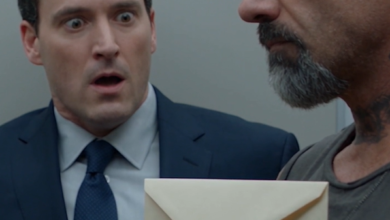
She reached under the register and pulled out a small stack of receipts.
Not unusual.
But the top one—
I recognized it immediately.
Folded twice.
Clean edges.
The same one.
“He came back for this,” she said.
“I know,” I replied. “Tasha told me.”
Marlene nodded slowly.
“He didn’t just look at it,” she said. “He asked me to print another copy.”
Twist five.
“Why?”
“That’s what I asked him.”
She paused.
“And he said… ‘I need the name.’”
I frowned. “What name?”
Marlene tapped the receipt.
Mine.
I felt something cold move through my chest.
“You gave it to him?”
She shook her head. “Not exactly. It was already there. Your card.”
Right.
I had paid with my debit card.
Which meant my name was printed at the bottom.
A small detail.
The kind you don’t think about.
Until it matters.
“He stood right there,” she continued, “and copied it onto a piece of paper. Slow. Careful. Like he didn’t want to get it wrong.”
Twist six.
“Did he say why?” I asked.
Marlene met my eyes then.
“No.”
Of course he didn’t.
That was the pattern.
No explanations.
Just actions.
“What else?” I asked quietly.
Marlene took a breath.
“He left something.”
That was twist seven.
She reached below the counter again and pulled out a small envelope.
Plain.
White.
No writing on the outside.
She handed it to me.
It was lighter than I expected.
Inside was cash.
Folded neatly.
I counted it without meaning to.
Forty dollars.
Way more than what I had paid.
And underneath the cash—
a second receipt.
Not from Harlow’s.
From somewhere else.
A pharmacy.
Dated the same day.
Attached to it was a note.
Not long.
Just a few words.
But they were written slowly, like someone who didn’t write often:
For the woman who didn’t look away.
My throat tightened.
“That’s not all,” Marlene said.
Of course it wasn’t.
Because now I understood something important.
The money wasn’t the story.
“What did he do?” I asked.
Marlene leaned against the counter.
“You remember the couple who comes in every morning? The older ones? Sit by the window?”
I nodded.
“They weren’t here that day. Their grandson was in the hospital.”
I felt the pieces starting to move.
“Serious?” I asked.
She nodded. “Very.”
“And the biker—?”
“He went there,” she said.
Twist eight.
The hospital was ten minutes from the diner.
I knew that because I’d driven past it more times than I could count.
But I had never thought about it the way I did now.
As a place someone might go… because of a breakfast.
“He didn’t know them,” I said slowly.
Marlene shook her head. “Not before that day.”
“Then how—”
“He asked,” she said. “Sat here for a while. Listened. People talk more than they realize.”
I pictured him.
Sitting in that booth.
Quiet.
Watching.
Not eating anymore.
Just listening.
While pieces of other people’s lives filled the room.
And somehow, he chose one.
“The boy needed medication,” Marlene continued. “Something insurance wouldn’t fully cover. The family was trying to figure it out.”
I looked down at the envelope in my hand.
Forty dollars.
A pharmacy receipt.
It wasn’t random.
It was exact.
“He used it there,” I said.
“Every bit,” she replied.
I swallowed.
“That was my money.”
Marlene shook her head gently.
“No,” she said. “That was his choice.”
And suddenly—
everything shifted.
The way he refused at first.
Not pride.
Not just that.
Control.
He didn’t want to receive something he hadn’t decided what to do with yet.
The way he ate slowly.
Not thinking about himself.
Thinking about where that money could go.
The way he came back for the receipt.
Not to check the amount.
To find a name.
So he could return something.
Not the money.
The meaning.
I felt something rise in my chest that I couldn’t quite name.
Not guilt.
Not exactly.
But close to it.
“I thought…” I started, then stopped.
Marlene didn’t ask me to finish.
Because she already knew.
We both did.
We had both thought the same thing.
That it was a small act.
Four dollars.
A moment.
Done.
But it wasn’t.
It moved.
It changed shape.
It became something else in someone else’s hands.
“Did he say anything when he left?” I asked.
Marlene smiled faintly.
“Just one thing.”
“What?”
She looked at me.
“He said, ‘Tell her I paid what I owed.’”
That was it.
No speech.
No explanation.
Just that.
And then he was gone.
That night, I sat at the kitchen table longer than usual.
Noah had gone to bed.
The house was quiet in that way it only gets when everything finally stops moving.
I took the envelope out again.
Forty dollars.
Still there.
I hadn’t spent it.
Didn’t feel like mine to spend.
Next to it, I placed the old photo booth strip from my wallet.
Noah at seven.
Crossed eyes.
Laughing at nothing.
I thought about that morning.
The coins on the counter.
The way the room had felt.
How easy it had been to misunderstand everything.
And how quickly I had moved on.
Before I knew what it had become.
The next morning, I went back to Harlow’s.
Same booth.
Same coffee.
Same bell.
Marlene brought my cup over and set it down without asking what I wanted.
Then she slid something across the table.
A receipt.
Folded twice.
I looked at her.
“He left it for you,” she said.
I opened it slowly.
Same handwriting.
Same careful lines.
Just one sentence this time:
Some things don’t stay small if you let them move.
I sat there for a long time after that.
Watching the door.
Half expecting him to walk back in.
He didn’t.
And somehow—
that felt right.
Because not everything that matters stays.
Some things just pass through.
Quiet.
Unnoticed.
Until they don’t.