A Biker Tore Up My Daughter’s Charity Check, Then Set a Worn Envelope Beside the Paper I Was About to Sign
Part 2
The pen touched the paper and left a dot of ink. Mallory pulled it away and read the line above the place Victor had marked for her signature. The line said she acknowledged receiving the full travel award that evening. It followed a paragraph about which trips qualified. She’d started to read that paragraph in the car, then abandoned it when Willa asked if the driver could take them through the coffee shop with the good blueberry muffins.
“When does the money actually come through?” she asked Victor.
“The award is made tonight.”
“When will I be able to use it?”
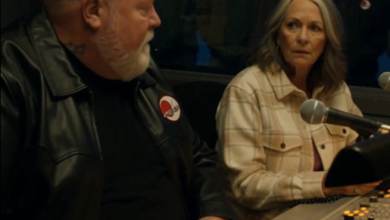
Victor lowered the microphone. A few feet from him, the person filming the ceremony checked the camera screen, then brought the camera back to their shoulder. Mallory could see Willa’s reflection in the black glass of a speaker on the floor. Her daughter stood with the two envelopes held against her chest.
“We do an intake after this,” Victor said. “Dana will walk you through it.”
Dana, the woman who had brought the clipboard up from the registration table, took one step out of the shadow cast by the curtain. She looked like she’d been waiting for her own name to come up.
“The payment hasn’t been scheduled yet,” she said.
Mallory looked at the acknowledgment again. She had spent lunch asking the mechanic if he thought the car would make it all the way to Iowa City. He’d set his coffee down and looked her in the face before he answered. She had appreciated that about him. Now she waited for Victor to offer a time she could put next to check in at 8:15 on the paper stuck to her fridge.
“We need you to sign so we can close the event,” he said. “Let’s take care of tomorrow offstage.”
It sounded like a way out. She could sign, sit down, watch Willa eat cake and talk to the adults when the lights went off. She reached for the pen she’d set down. Then Willa pulled the old paper just far enough out of the envelope to show her whose name was on it. The recipient was Lydia Reed. Below Lydia’s name was a sentence about having received the full award. There was a signature where Mallory’s was meant to go.
Mallory turned to the biker. “Does she know you brought this?”
He looked at the floor for a second. The cardboard halves lay far enough apart that someone could step between them.
“She was my wife,” he said. “She died in February.”
Willa put the paper back into the envelope carefully. Mallory saw her look toward the registration table, where the refreshments were, and then toward the double doors behind it. She wanted to ask if the old envelope was all right to hold. Mallory recognized the look from the time Willa accidentally carried home a shell another child had brought to school.
“You can hand it back to him,” Mallory said.
The biker took the envelope. Dana, still beside the curtain, had sat through the exchange holding her own hands together at her waist. She came over and turned Mallory’s form toward herself. After a moment, she tapped a small number below the blue line.
“Lydia’s file shows the award was completed,” she said. Then she looked at the biker. “How much did she get?”
“Ask me how many times she called first.”
Part 3
They walked down the side of the stage together. The fundraiser had a silent auction on the other end of the room. Banquet workers began to bring out coffee there, and the microphone went to a man who was ready to explain the rules for the auction again. Mallory asked the biker if he wanted to take a seat near the coat racks, where she could talk to him without everybody hearing. His name was Amos Reed. He said people who knew him from riding called him Gauge, because he’d spent most of his working life repairing measuring equipment at a machine shop.
From his jacket he drew a little spiral notebook. Across the cover someone had written Lydia rides, in green pen. Seven pages had the date and the number of miles they’d driven to see the hospital’s specialists. Two entries had a question mark beside them. Mallory thought they were canceled trips until Amos showed her the back of the book. On those dates Lydia had left messages asking the fund to call her about the reimbursement. On the last page she’d written down the name of the mechanic who had let them pay for a repair in installments.
“She did that part herself,” Amos said. “The calls. I’d offer every time. She said she could still make a phone call.”
“She didn’t get any money?”
“Eighty dollars from a volunteer who found out about the tire. Lydia sent that woman a card every April. From the fund, nothing.”
Mallory wondered if her own name would have ended up in a notebook like his if the car had started that morning and she hadn’t called the clinic’s travel coordinator. The coordinator had given her two local numbers. The first belonged to a group that could drive Willa the week after next. Victor had picked up on the second ring and asked if she was comfortable telling her story at the benefit. She’d said she could if somebody would tell her how the rides worked. Then she’d called her supervisor to find someone to finish the Thursday shift.
“How did you know they’d give me the same form?”
“Our riding group used to collect for them. They sent me the program. I recognized the sponsor and the name of the award.” Amos put the notebook down. “I asked Victor about the paperwork last week. He told me they’d changed it.”
Willa was running a finger around the rim of a water glass. She asked if people in the room could hear what they were saying. Mallory told her anybody who wanted to talk could come sit down. A man in an apron brought another glass and laid a rolled napkin by Willa’s elbow. He said she could have a muffin from the kitchen if she wanted one. She did.
Dana joined them a minute later. She said the first thing she could do was ask to have Mallory’s paperwork marked pending. She planned to tell the board treasurer what she’d heard onstage. Amos nodded. He opened his notebook to the first reimbursement request Lydia had made and pushed it across the table. Dana held her finger on the date for a long time.
“I don’t think your wife wrote to the wrong person,” she said. “I think I’m looking at a call I took.”
Part 4
At eight the next morning, Mallory sat in the back of a borrowed hatchback with Willa’s sweater folded in her lap. The clinic travel coordinator had reached a retired volunteer named Paula before going home. Paula had a dentist appointment at ten and told them she’d bring a book in case the hospital ran late. She kept a plastic bag in the back for the boots of children who put their feet up on the car seats. When Willa took her boots off without being asked, Paula turned around in her seat and smiled.
The first person to send Mallory the fundraiser clip was her coworker from the deli. He wanted to make sure nobody had gotten hurt. He’d heard something on a local page about a man demanding part of a girl’s donation. The clip showed Amos holding both halves of the check and Willa reaching for one. It ended there. In a statement below it, Victor said a former volunteer had interrupted an award presentation over a personal dispute. The fund, he wrote, had carried out its commitments to patients.
Mallory read that last sentence with her phone between her wrist and the window so Willa wouldn’t see it. Her daughter was drawing a rectangle on the fogged glass with a finger. Through the clear strip inside it, Mallory could see the bare tops of fields beside the road.
“Can you ask him if he’ll come next time?” Willa asked.
“Who?”
“Amos. I want him to see where I go.”
Mallory said she’d ask. At the clinic, she sat in the waiting room with Willa’s white envelope and found that her daughter had drawn a picture on the back of an old grocery receipt. It showed a little car with two people in it. Mallory could tell which person she was by the knot on top of the head. She turned the receipt over when her phone buzzed again. This time it was Dana. She wanted to know whether Mallory would talk somewhere private after the appointment.
They met that afternoon in the public library lobby. Dana brought a paper cup of tea she forgot to drink. She explained that when she’d started taking calls for the fund, Victor told her the check register lived with an outside bookkeeper. Volunteers logged requests, leaving the decisions to the office. By the time Dana was handling the intake forms herself, she could see records of checks made out to vendors. She rarely saw one made out to a family. Victor said transportation companies were doing the billing directly and that the families got the benefit when they used the rides.
“Did you believe him?” Mallory asked.
“I believed him for longer than I’d like to tell you.” Dana turned the paper cup on its base. “What changed it was Lydia. She used to call where I could see the time of the last call whenever she gave me her name. I started asking him what to say to her. I finally told her I’d ask in person. When I went in to ask him, he wanted to know why I was still taking calls about a closed file.”
Mallory could see Willa in the children’s area through a low bookshelf. She was sitting on the rug with her legs tucked under her, holding a picture book upright for another child to see.
“How many files?” Mallory asked.
Dana took a folded statement out of her bag. “The board treasurer counted fourteen closed awards with no matching payments. She wants to know which of them belong to people who are still waiting.”
Part 5
Mallory met Amos the next day in a booth at a diner with a crack in the vinyl where somebody had put a strip of dark tape. Behind him, his cruiser stood on a patch of dry pavement. He was trying to hold a spoon straight in a saucer while Willa spread a road map across both sides of the table. Paula had given her the map out of the glove box. There was a fold through Iowa City that had gone white from years of being opened there.
“I sit in the back here,” Willa said, pointing to the road that took them past the fields. “Then when we get here I hold my breath till the parking gate opens. It’s a thing I started when we had our own car.”
Amos leaned over to see where she’d put her finger. He told her Lydia used to put in her earrings at the second long light after they turned off. If she got both in before the light changed, it was going to be a good day. Willa asked whether Lydia had ever dropped one. Amos said he found the last one while he was cleaning out the car to sell it.
Mallory looked at him across the map. The jacket he wore had a small stitch coming loose where somebody had mended the sleeve. She asked which of the two of them had fixed it. He put the pad of his finger against the blue cotton, as if he’d forgotten it was there.
“She fixed most things we wore,” he said. “I used to take her to every ride breakfast whether she was in the mood or not. It was her idea to start collecting money for the travel fund.”
At the event, Mallory had thought he came to embarrass Victor. She understood now what he’d had to tell himself in the parking lot before he walked through the glass doors. She slid the fundraiser clip off her phone and set down a link to the longer version her coworker had since tracked down. She asked whether he wanted her to post the whole thing. Amos looked at Willa, who was sounding out the name of a road in tiny print.
“Ask her first,” he said.
They wound up writing a statement together about the paperwork. It had no names of other families and didn’t include the close-up of Willa on the stage. The child read the line about the twelve promised rides aloud and asked whether people would know that Paula was the reason she’d gotten to the first one. Mallory added Paula’s first name after she called to ask. Then she posted it under her own name.
By the time they asked for another pot of coffee, a father named Eric had written to her. He said he’d signed the receipt after a fundraiser the previous spring. When he inquired about the money, somebody at the office said two of his trips had been paid to a transportation company. Dana stopped by the diner with her list, checked the entries and called Eric, who was on his break at work. While he talked, Mallory watched Dana’s finger move from one line to the next.
“Was somebody driving you at that point?” Dana asked him.
“My son,” the man said. “He had just gotten his license.”
Dana made a note in the margin. Under the transportation company’s name, she had written some words Mallory could now read from the other side of the table. Victor had also approved the invoices.
Part 6
The board treasurer, Judith Owens, asked Mallory to bring her unsigned receipt to a special meeting on Tuesday. She told her the transportation company Eric had been billed under did have a valid contract to carry patients. Several invoices, including his, had a code the company used for another line of work. Judith had asked for a description of each disputed charge before letting herself come to a conclusion. The company had responded that morning with a list. The first van charge under Eric’s award was for taking centerpieces and signs from a storage room to the banquet hall.
“The second was for taking them back,” Judith said.
Mallory was sitting in front of her garage waiting for the mechanic to call. A thin line of frost still ran down the edge of the roof in the shade. After Judith hung up, she kept looking at the roofline for a while. She could put into words now what had upset her about the shape and weight of the check. It had asked the entire room to celebrate something that hadn’t happened yet. Willa had gone up under the lights believing the adults had already figured out how they were getting home from every appointment.
Victor called while Mallory was in the mechanic’s office. She stepped out so the man at the counter could finish talking to the customer behind her. Victor said he’d been authorized to arrange transportation for her appointments and could do it beginning that week. He could send a driver directly to the house on Friday. He had the driver’s availability open in front of him. Mallory told him it sounded like something they should put in writing.
“I can send a new form,” he said. “I was hoping you’d let the board know we worked it out.”
“Can you send me one that says when the rides are coming?”
He asked her whether she thought he wanted anyone to miss an appointment. Mallory believed he’d helped plenty of people in his time at the fund. One of her coworkers remembered him spending a Sunday chasing down a working wheelchair van for a neighbor. She could hear the tired man behind the practiced voice and wanted to believe he’d call every family on Dana’s list if she let this go away quietly. She thought about what Willa would have seen if Amos had gone home that night without walking up to the table.
“I’m going to the meeting,” she told him.
At home, Willa was putting her markers into the school bag one at a time. Some of the caps snapped loudly enough to sound broken. Mallory asked if she remembered the date she’d noticed on the paper. She said yes and held up a sheet from her backpack. A multiplication worksheet was folded around the drawing of the car. She’d written the date of the fundraiser at the top and left a line for the date on Lydia’s receipt.
“Can we ask him what day it was when she signed?” Willa asked.
“She signed the day of her benefit.”
“Did they say she got twelve rides, too?”
Mallory messaged Amos to ask. He answered with a photograph of Lydia at the banquet hall, smiling because he’d done something behind the camera. She was holding up a cardboard check about as wide as she could reach. At the left edge of the picture, there were pieces of a second one leaning against the wall. Amos sent a second message seconds later. The family who’d received that one was coming to the meeting.
Part 7
The board met in the banquet hall with the stage lights off. Dana took a seat near the front, and Amos came in with three riders who all sat on the same side of the room. Mallory knew one of them by his work boots. He’d been out by the motorcycles at the benefit selling raffle tickets for the travel fund. Now he was holding a donation receipt he’d folded small enough to bury in his palm.
Judith had printed a chart that showed the awards, the names of the people who had confirmed their own records and the payments the fund could document. She kept family details out of the copies on the seats. When her presentation got to Eric’s two trips, she asked if he wanted to tell that part. He stood up in the back and told them what it had been like the first time his son drove him to the hospital. The boy had borrowed a shirt with a collar because he thought the staff might take him more seriously if he wore it. Eric had kept thinking about how he’d promised to pay him for gas.
One of the board members asked Victor why the vendor billing crossed into the patient account. Victor said the banquet was expensive and raised money for enough rides to make the cost worthwhile. At the end of the year he expected to reconcile it. Judith asked where the checks to families were listed in that plan. Victor flipped to another page. Under a heading for each event, projected sponsorships had been counted as expected income. Some never came. The family awards in the final reports had still been marked paid.
“Who was supposed to go back and tell them?” Mallory asked.
Victor looked out across the table before answering. “I was.”
Dana put down a list of calls she’d requested permission to share. The woman who had signed the other check the same night as Lydia explained that members of her church had put money in a coffee can at the grocery store to cover rides after the checks failed to come. She told the board she almost returned the money because the ceremony clip had made her feel like people might think she was asking twice. Amos unzipped the pocket inside his jacket. He handed Judith the grocery receipt Lydia had taped into her notebook. Beside the total, Lydia had written a reminder to ask for another form in case she’d used the wrong one.
“She thought she filled something in wrong,” Judith said.
“For weeks,” Amos said. “I was there every time she went through that folder.”
Nobody asked him to explain why he had torn the check. At the end of the meeting, he did it anyway. He said he was sorry he had startled Willa. He’d tried to warn the fund ahead of time and got to the table just as Mallory was about to sign. He could see the pen going down. The photo was what Victor wanted from that evening, Amos said, and tearing the check was the first thing he could think of that made everybody put the camera down long enough for her to read.
Willa waited for an open chair before she approached the table. She laid the worksheet in front of Judith. Her hand came down on the space she’d left empty. “Can we make a paper for the day the driver comes?” she asked. “So my mom can put it on the fridge?”
Judith slid a blank notepad toward her. “Let’s write down your next appointment right now.”
Part 8
The board removed Victor from his job and commissioned an independent review. It set aside money to reimburse families whose travel costs had already come out of their own pockets. Some arrived with a shoebox of receipts. One woman had a bank envelope with a bus transfer tucked in the crease. Dana was at the table on the first Saturday the office opened for families, and she started each appointment by asking who had brought them there. She wrote down what they said while they watched.
The clinic travel coordinator, Paula, Judith and two riders from Amos’s group helped start a separate program with a dispatcher who called families before the first ride. The board named it Lydia’s Ride Fund with Amos’s permission. Sponsor money was set aside for transportation before anyone booked a room for a benefit. A family received a written pickup time or a record of a transfer after it was sent. Mallory kept the first card on the fridge beneath a magnet the size of a dime. Willa drew a line through each appointment when she got home.
By spring the mechanic had finished with their car. Mallory paid him with part of her tax refund. On the first morning she drove Willa herself again, she got halfway to the hospital before she realized her daughter had been holding a brown paper bag on her lap without looking into it. They stopped for a muffin afterward. Willa took a paper napkin from the dispenser, sketched the coffee shop next to the road and asked Mallory if they could make one more stop on the way home.
Amos was at the machine shop on a Saturday, helping back a friend’s bike out of the service bay. The afternoon light hit the chrome hard enough that Mallory had to put a hand over her eyes. She could hear him calling directions before she could see his face. When he recognized them, he took off his right glove and set it on the seat. Willa brought him the paper bag.
Inside it was a map she’d drawn. She’d copied the bends she could remember, including the parking gate at the hospital. She had placed a red heart over the first gas station and put a very small green purse beside it. Amos asked her who carried the purse. She said she didn’t know what color Lydia’s purse was, but she knew Lydia had written the gas down in green.
“Lydia used green for almost everything,” he said. He held the map close and let her point out where the road went when you drove it the other way.
Mallory watched him take the notebook from inside his jacket and find a place for the drawing where neither edge would stick out. She remembered the night he put the old envelope on the table. The things she’d been looking at then were his hands, his size and the leather sleeve moving past her daughter. Watching him make room for Willa’s map, she saw a man who still knew how his wife liked to mark a road.
“My wife wrote down every time she paid for gas,” he told Mallory. “I want somebody who’s sitting at her kitchen table tonight to know we’ll count what she spent, too.”
When they left, Willa climbed into the back seat and moved the white gas-money envelope out of her mother’s way. She turned it over and made a little check mark beside the heart she’d drawn earlier that morning.
Follow the page for more stories about the people who stay long enough to get someone home.
Original fiction.