Part 2: An 8-Year-Old Was Asked to Read at a Veterans Day Assembly — Then He Pulled Out His Father’s Last Letter From Afghanistan
Nobody clapped.
Nobody corrected him either.
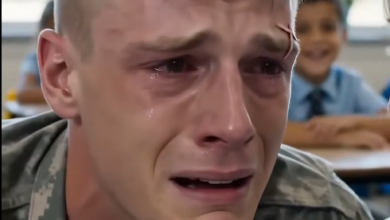
The auditorium at Jefferson Elementary seemed to lean toward the stage, every paper program and folding chair suddenly too loud. Noah Bennett stood behind the podium, barely tall enough to see over it, holding the envelope as if it were heavier than anything in the room.
Mrs. Parker took one careful step toward him.
“Noah,” she said gently, “we can read your class letter first.”
He shook his head.
It was not defiance exactly.
It was the stillness of a child who had rehearsed being brave because he was afraid he might not get a second chance.
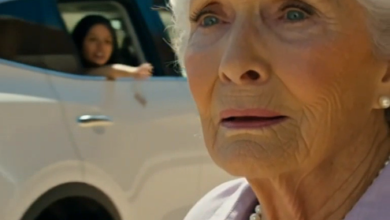
His mother, Rachel, remained half-standing in the third row. She was thirty-four, pale from too many sleepless nights, with dark hair pinned back and a black dress she only wore to ceremonies she did not want to attend.
Two seats beside her sat an empty chair.
No one had placed it there on purpose, but everyone noticed it now.
Noah’s father, Staff Sergeant Daniel Bennett, had been gone for nearly a year.
Around town, people knew the official pieces. Roadside bomb. Final deployment. Military funeral in winter. Folded flag. A young widow holding a boy who did not cry until the rifles fired.
They did not know the rest.
Noah looked down at the envelope.
“My mom keeps this in the top drawer,” he said. “Under the socks with no matches.”
A small ripple of sad laughter moved through the room, then disappeared quickly when Rachel covered her mouth.
Noah’s hands trembled.
The envelope was creased at the corners. The tape had been opened and resealed many times. On the front, in block letters, was written: For Noah, when he is ready.
That was the first piece.
Not “when he is older.”
Not “when he misses me.”
When he is ready.
Principal Hayes lowered himself into a chair near the stage, as if he understood that interrupting now would turn the moment into something smaller than it was.
Noah unfolded the letter.
The paper made a dry, tired sound.
“My dad’s handwriting is messy,” he said. “He said helicopters made the table shake.”
A few veterans in the front row bowed their heads.
Noah began reading.
“Dear Noah, if you are holding this, it means I did not make it home the way I promised.”
Rachel closed her eyes.
Mrs. Parker pressed a tissue against her lips.
Noah continued, his voice thin but steady.
“I know grown-ups say soldiers are brave. Sometimes they are. Sometimes they are just dads who miss bedtime stories and pretend the dark outside does not scare them.”
The room changed.
The sentence did not sound like a speech. It sounded like a man sitting alone under a dim light, trying to leave enough love on paper for a child to carry.
Noah paused.
“My dad always called me Bug,” he said, then looked embarrassed. “Because when I was little, I kept crawling under the kitchen table.”
A veteran in a wheelchair smiled through tears.
Noah returned to the letter.
“Bug, I need you to know something. The bravest person in our family is not me.”
Rachel’s eyes opened.
She had read the letter before, but not aloud. Not in a school auditorium. Not with every neighbor, teacher, and veteran hearing Daniel’s voice come back through their son.
Noah swallowed.
“I thought that part meant Mom,” he said.
Rachel looked down.
Noah glanced toward her.
“But there’s more.”
That was when people began to understand the letter had not only come from the past.
It had been waiting for this room.
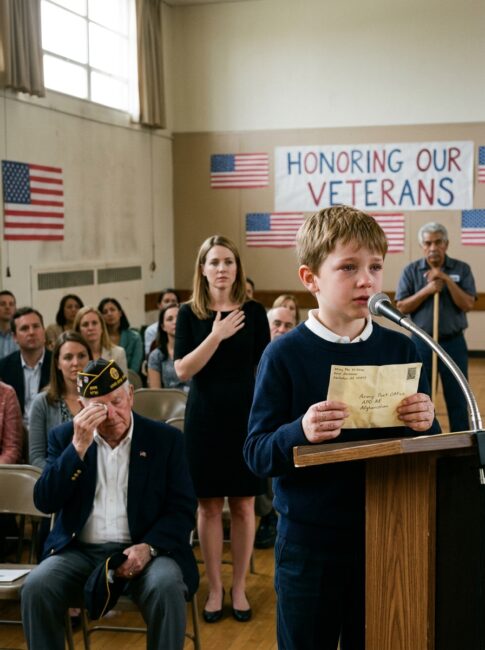
Noah read slowly now, tracing the lines with one finger.
“When people thank me for serving, I want you to look at your mother. She served too, only nobody gave her a uniform.”
Rachel shook her head, tears already sliding down her face.
Daniel’s letter continued.
“She served every time the sink broke and she fixed it with a video on her phone. She served every time the car would not start and she smiled so you would not be scared. She served every birthday I missed, every Christmas morning I watched through a screen, every night she heard a car door outside and hoped it was me.”
Noah stopped.
The auditorium was silent except for someone crying near the back.
For months after Daniel’s death, Rachel had been judged in quiet ways.
Some parents thought she kept Noah too close. Some thought she should have let him talk more about his father. Others whispered that she seemed cold at the funeral because she had not collapsed in front of the cameras from the local paper.
At school pickup, people asked if she was “moving forward.”
At the grocery store, one woman told her that Noah needed a “strong male influence,” as if grief had made Rachel incomplete.
Noah heard more than adults realized.
He heard the pauses.
He saw the tilted heads.
He knew when people looked at his mother like she had failed to perform sadness correctly.
Now his father’s letter was naming what nobody had seen.
“My mom still cuts my sandwiches into triangles,” Noah said suddenly, lifting his eyes from the page. “Even when she is tired.”
A soft sound moved through the room.
It was not laughter.
It was recognition.
Then Noah read on.
“Bug, if there comes a day when people clap for me, do not let them forget her. I wore boots. She wore exhaustion. Mine came off at night. Hers did not.”
Rachel bent forward, both hands over her face.
Mrs. Parker stepped down from the stage and sat beside her, placing one arm around her shoulders.
Noah looked toward the front row of veterans.
“My dad said not all heroes stand where people can see them,” he read. “Some pack lunches. Some answer hard questions. Some sit on the edge of a bed until a little boy stops pretending he is not crying.”
A gray-haired Vietnam veteran removed his glasses.
The first twist had been Noah changing the speech.
The second had been Daniel’s letter honoring Rachel.
The third came when Noah reached the middle page and hesitated.
He looked at Principal Hayes.
“My dad wrote about Mr. Alvarez,” he said.
Everyone turned toward the back door.
Mr. Alvarez, the school custodian, stood near the wall holding a mop bucket handle. He was a Hispanic American man in his early seventies, a quiet Vietnam veteran who came before sunrise, polished floors, fixed loose desk legs, and never sat with the honored guests during Veterans Day assemblies.
He had been invited to the front row every year.
He always said he needed to work.
Noah looked at him.
“My dad said you knew him.”
Mr. Alvarez froze.
Daniel’s letter trembled in Noah’s hands.
“Bug, if Jefferson Elementary still has a custodian named Miguel Alvarez, you listen to him. He was the first man who taught me that coming home from war can be harder than going.”
Mr. Alvarez’s face changed so completely that several teachers turned away to give him privacy.
The fourth twist settled over the auditorium.
The man who emptied trash cans had once held Daniel Bennett together.
“When I was nineteen,” Noah read, “I thought being tough meant not needing help. Mr. Alvarez found me behind the old gym after my first deployment, sitting in my car because I could not make myself walk into a room full of people. He sat beside me and said nothing until I remembered how to breathe.”
Mr. Alvarez covered his eyes.
“He never told anyone,” the letter said. “That is why I trusted him.”
Noah looked confused for a moment, the way children do when adult pain is too large but still visible.
Then he continued.
“If I do not come home, and my boy ever feels like he has to be tough for everyone else, please tell him what you told me. Tell him brave people are allowed to be held up.”
Mr. Alvarez took one step forward, then stopped.
Rachel lifted her head.
She had not known that part.
Nobody had.
Daniel had carried his own fear quietly because the town loved him most when he looked unbreakable.
Now the letter was breaking that image tenderly, piece by piece.
Noah turned to the last page.
His voice shook for the first time.
“Bug, there is something I need you to do for me on Veterans Day.”
Principal Hayes pressed a hand against his chest.
Daniel had known.
Maybe not the exact stage or the exact year, but he had known his son would someday stand in a room where people confused flags with understanding and applause with comfort.
Noah read the line.
“If they ask you to say thank you, say it. Gratitude matters. But then look for the people nobody hands a microphone to.”
The front row veterans sat straighter.
The parents in the back looked around, seeing janitors, cafeteria workers, widows, grandparents, and children with folded programs in their laps.
“My dad said,” Noah continued, “thank the soldier, but do not forget the person who waited, the person who buried him, the person who keeps loving him after the parade is over.”
Rachel could no longer stay seated.
She walked to the stage.
Not quickly. Not dramatically.
Just like a mother who had reached the end of what she could watch from a chair.
Noah looked down at her.
“Did I do wrong?” he whispered, but the microphone caught it.
The question moved through the room like a hand touching every heart.
Rachel shook her head.
“No, baby,” she said. “You did exactly what he asked.”
Then she held out her arms.
Noah stepped away from the podium and folded into her.
The letter remained in his hand, pressed between them.
For a long moment, no one clapped because clapping would have felt like making noise over something sacred.
Then Mr. Alvarez walked forward.
His steps were slow.
When he reached the stage, he removed the small American flag pin from his work shirt and placed it on the podium beside Daniel’s letter.
“I told your father,” he said, his voice rough, “that brave people are allowed to be held up.”
Noah looked at him.
Mr. Alvarez knelt with effort until his eyes were level with the boy’s.
“And now I am telling you.”
That was when the auditorium finally broke.
The assembly did not return to the printed schedule.
The choir did not sing its second song. The principal did not read the list of donors. The fifth graders never performed the poem they had practiced for two weeks, and no parent complained.
Instead, the room stayed quiet.
Not empty quiet.
Full quiet.
The kind that arrives when people are still holding the last sentence they heard.
Principal Hayes walked to the microphone after Rachel and Noah stepped aside. He looked at the rows of veterans in the front, then at Mr. Alvarez standing near the edge of the stage with both hands folded.
“For years,” he said, “we have asked Mr. Alvarez to sit in the front row. Today, we will wait until he does.”
Mr. Alvarez shook his head at once.
“No, sir,” he said. “I am all right back here.”
But the veterans had already begun moving.
An elderly woman in a Navy cap stood first. Then a Korean War veteran rose with help from his grandson. A younger man with a prosthetic leg stepped aside and opened a space in the center of the row.
No one applauded.
They simply made room.
Mr. Alvarez looked at the empty seat as if it belonged to someone better dressed, someone cleaner, someone whose pain had been officially recognized.
Rachel walked to him and touched his arm.
“Please,” she said. “Daniel asked.”
That was the only argument that worked.
Mr. Alvarez sat in the front row.
Noah sat beside him.
He still held his father’s letter, now folded carefully along its old creases.
The rest of the assembly became smaller after that, and somehow more honest. Children handed cards to veterans. Parents wiped their faces with napkins from the refreshment table. Teachers spoke softly instead of filling every silence.
After everyone left, Rachel stayed behind.
The auditorium smelled of paper flags, floor wax, and coffee from the veterans’ breakfast. Sunlight fell across the stage where Noah had stood.
She found him at the podium.
He was sliding the classroom thank-you speech into his backpack.
“I should still give this to Mrs. Parker,” he said. “The class worked hard.”
Rachel smiled through tired eyes.
“She’ll like that.”
Noah looked at the folded letter in his hand.
“Do you think Dad heard?”
Rachel wanted to answer quickly. Mothers often do that, building bridges over questions too deep for children to cross alone.
But she had learned that Noah deserved truth soft enough to hold.
“I think,” she said, “your dad knew his words would find you when they were supposed to.”
Noah nodded, accepting that in the quiet way children sometimes accept mystery better than adults.
Near the doors, Mr. Alvarez waited with his mop bucket.
He was no longer wearing the small flag pin. It was still on the podium beside the microphone.
Noah picked it up and walked over to him.
“My dad said you helped him breathe,” Noah said.
Mr. Alvarez looked down at the boy.
“Your dad helped me too,” he said. “More than he knew.”
Noah held out the pin.
Mr. Alvarez did not take it right away.
Then he bent, slowly, and let Noah fasten it back onto his work shirt.
The pin was crooked.
Neither of them fixed it.
That afternoon, Rachel placed Daniel’s letter back in the top drawer, but not under the unmatched socks anymore. She put it inside a small wooden box with his dog tags, his wedding ring, and the photo of him holding Noah as a baby.
A week later, Jefferson Elementary added one chair to every Veterans Day assembly.
No name on it.
No plaque.
Just an empty chair in the front row, reserved for someone who had served quietly, waited faithfully, or carried grief after everyone else went home.
And each year, before anyone spoke, Noah Bennett placed a folded piece of paper on that chair.
Not the original letter.
A copy.
The real one stayed home.
But the last line was always visible.
“Look for the people nobody hands a microphone to.”
And if this story stayed with you, follow this page for more heartfelt stories about the quiet love and hidden courage people carry every day.