The Cashier Mocked the Old Woman Counting Pennies for Bread — Three Weeks Later, the Girl Who Paid Her $4.37 Got a Letter From a Lawyer
PART 1
By the time Edith Foster asked the cashier to take the milk off her bill, the people behind her had started sighing and someone had laughed.
Edith drew the pint back across the scanner. Her palm left a wet mark on the counter. She had already counted her coins twice, and a nickel had rolled under the plastic divider. At eighty-one, she could still get down on the floor to look for something. Getting back up with everybody watching was a different matter. “Just the bread,” she said. The cashier, Jenna, left the milk where it was.
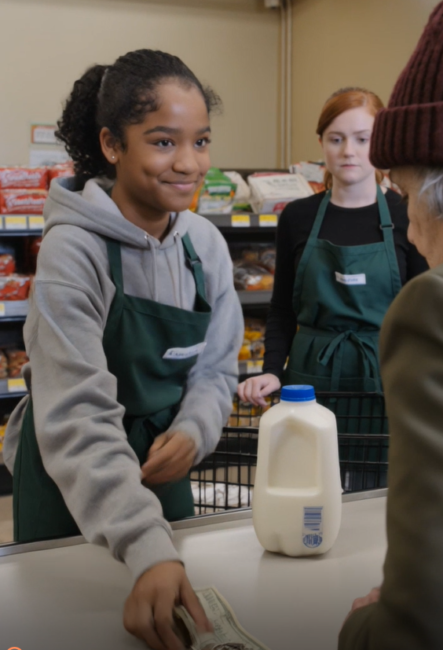
Maya Dale stood at the end of the register with a paper bag open between her hands. She was sixteen and had been told on her first day that a good bagger kept the line moving. Across from her, a man holding coffee filters checked his watch. Maya reached for the envelope in her apron. She hadn’t decided what to say yet. What she remembered later was the way Jenna looked at Edith as the coins came out, like she’d been waiting a long time to see somebody else pay.
PART 2
Maya and her mother lived in an upstairs apartment in Toledo where the kitchen floor sloped toward the stove. When they fried eggs, the whites all ran to one side of the pan.
That morning there had been one egg left. Karen said she’d already eaten. Maya found the pan clean and dry in the rack, but she ate the egg anyway. Her mother would’ve asked why she hadn’t.
Karen worked as a home care aide. On days when a client canceled, she sometimes sat in the car outside their apartment for a few minutes before coming in. Maya knew because she could see the car from the kitchen. She never went down to ask what had happened. She usually put the kettle on.
The grocery store let customers tip the teenagers who carried bags out. Maya kept the money in an envelope she’d taken from a stack of old utility bills. On Friday she had four dollars and sixty-two cents. She was going to buy eggs before she went home.
Edith came in shortly before five, wearing an olive coat and a burgundy knit hat. Maya had seen her once before in the bread aisle, turning loaves over to look for the day-old sticker. This time she asked whether the smaller milk cartons were cheaper. Maya went to check because Edith had left her glasses at home.
“You work Fridays?” Edith asked when Maya came back.
“Most of them.”
Edith read the badge pinned to Maya’s apron. Then she glanced at her face, as if the two pieces of information didn’t quite go together.
Maya was called to help with a cart before she could ask what was wrong.
When she got back, Edith was already in Jenna’s line. Jenna had an auburn ponytail and a habit of talking to customers before their groceries even reached her scanner. She knew who wanted paper bags and whose kid had made varsity.
She watched Edith unload the bread and milk without saying hello.
Edith watched her back.
The woman behind Edith had a cart full of groceries. Jenna leaned around Edith to ask how her son’s basketball game had gone.
PART 3
“Four thirty-seven,” Jenna said after scanning the milk.
Edith opened a zippered coin pouch. She set down the quarters first, then the dimes. The pennies stuck together at the bottom. She worked them apart with one finger.
“I thought the bread was marked down.”
“That sticker was for yesterday.”
Edith turned the loaf over. The bright sticker was still there. Jenna checked the date on it and turned the bag back around.
The man with the coffee filters let out a breath. A woman behind him pushed her cart forward until a wheel touched Edith’s shoe. Edith moved her foot, then apologized.
“Anybody got a calculator?” Jenna asked.
Somebody near the back laughed. It was one short sound, over before Maya could see who had made it.
Edith kept counting.
Maya had been working with Jenna long enough to know what she did when a customer came up a few cents short. She usually pulled something from the spare change cup under the counter and carried on. The cup was right beside Jenna’s wrist.
A nickel rolled under the divider.
Edith started to bend.
“Take the milk off,” she said instead.
Jenna kept her hand on the carton. “You sure?”
Edith nodded.
There was nothing particularly loud about the way Jenna asked. That made it easier for everyone to pretend they hadn’t heard the rest.
Maya looked at the coins. Edith was sweeping them back into her pouch one at a time, careful to get every one.
At home, Karen sometimes put an item back before she reached the register. She’d walk all the way to the right aisle even when they were in a hurry. As a little girl, Maya had believed this was because her mother liked keeping the store tidy.
She put the paper bag down and reached into her apron.
PART 4
Maya counted out four dollars and thirty-seven cents. She left the last quarter in the envelope.
“You can keep the milk,” she said.
Edith looked up.
Maya was afraid she’d made things worse. It was the kind of help that could make a person feel even more watched. So she picked up the bread and asked whether Edith wanted it in with the milk.
“Together’s fine,” Edith said.
Jenna rang up the money. The drawer sprang open. Maya took the receipt and slipped it into the bag without reading the total aloud.
Edith drew the bag toward her.
“Would you keep it?” she asked.
“The receipt?”
Edith nodded. Maya took it out again and folded it once. She tucked it in the envelope with the quarter.
After Edith left, the man with the coffee filters put them on the belt. He looked at Jenna and said, “I had time to wait.”
He could have said it a minute earlier. From the way he stood there afterward, Maya thought he knew it, too.
Jenna scanned the box without looking at him.
Maya reached under the bagging rack for a fallen twist tie and found the bus pass. It was tucked inside a cracked plastic sleeve. On the back, somebody had written an address in small block letters, followed by IF FOUND, PLEASE RETURN.
“She dropped her pass,” Maya told the bagger coming on for the next shift.
Jenna heard her. “Leave it in lost and found.”
Maya thought about the two buses she took home when Karen couldn’t pick her up. She thought about standing at the transfer stop and reaching into a pocket for something that wasn’t there.
“I can take it after work.”
Jenna pressed both hands against the counter.
For the first time since Edith had come through her line, she looked worried.
PART 5
The address belonged to a nursing home six stops from the store. Maya had passed it plenty of times. She’d never noticed the bench under the front windows until she got off the bus and found two women sitting there sharing a bag of cheese crackers.
Inside, a receptionist took one look at the cracked sleeve.
“Edith doesn’t live here.”
Maya looked down at the address again.
“She used to volunteer here,” the receptionist said. “She still comes to see a friend on Fridays. If she loses something on the bus, she’d rather have it come here than put her home address on it.”
Maya could have handed over the pass and left. Then she remembered Edith stepping outside with the milk held against her coat. It had been getting cold. She asked if Edith was still in the building.
The receptionist reached for the phone, then noticed Maya’s badge.
“Dale,” she said. “Would you mind waiting?”
Edith came down the hall a minute later, still wearing her coat. Without the checkout line behind her, she seemed to have all the time she needed.
“I found your pass,” Maya said.
Edith accepted it and ran her thumb over the crack in the sleeve.
“You came all the way out here?”
“Six stops.”
That got a small laugh. Then Edith looked at her again. Maya had seen the same expression in the bread aisle, but this time Edith didn’t look away.
“Is your mother’s name Karen Dale?”
Maya nodded.
Edith lowered herself onto a chair near the desk. She looked as if she’d been trying to remember something for a very long time and had only just realized she’d remembered it correctly.
“Ask her if she still has the yellow blanket,” she said.
PART 6
Karen was peeling an orange over the kitchen sink when Maya asked about the blanket. She set the orange down with the peel hanging from it.
“Where did you hear about that?”
Maya told her the woman’s name. Karen pulled out a chair. She had known Edith as the night nurse who kept a cardigan over her scrubs and ate crackers standing up because every time she sat down somebody needed her.
Karen had been twenty when Maya was born. The doctor was down the hall with another patient when the baby came. Edith had been beside Karen, telling her when to breathe. She was the one who caught Maya and put her on Karen’s chest.
“The blanket was hers,” Karen said. “She brought it in the next day because I didn’t have one to take you home in.”
Maya had seen a picture of herself in that blanket. She’d always thought it belonged to the hospital.
Karen went to the bedroom and brought back a shoebox. Under Maya’s newborn picture lay a hospital statement with a zero balance. Karen had gone in to arrange installments and been told somebody had already paid. The clerk wouldn’t give her a name.
Edith had been the only person at the hospital who knew Karen was saving bus fare to get to the billing office. She’d also been the one who told Karen to go back and ask for a receipt after the balance was cleared.
“I asked her straight out once,” Karen said. “She told me to put my money away and go home to you.”
Karen called the nursing home the next morning and left her number. Edith called back on Sunday. She admitted paying the bill. She also admitted she’d recognized Karen’s face in Maya before she’d read the badge.
“Why didn’t you ever tell me?” Karen asked.
“Because then you would’ve tried to pay me back.”
They made plans to have coffee the following week. Edith canceled the morning they were supposed to meet. Karen saved the voicemail because Edith said she wanted to see the blanket again.
Three weeks to the day after the grocery trip, a letter arrived addressed to Maya.
Elena Ruiz, a lawyer, wrote that Edith had died and asked Maya to come in with her mother. Maya read the word died three times. She still had Edith’s grocery receipt in the envelope in her apron.
At the office, Elena asked whether Maya knew a woman named Jenna Foster.
“Jenna from work?”
“She was Edith’s granddaughter.”
Maya thought of the spare change cup Jenna hadn’t touched.
Elena said the two women had been estranged. She knew Edith’s account of the falling-out. She hadn’t heard Jenna’s. Then she turned a document around and showed Maya the address of a small house a few blocks from the grocery store.
Maya recognized it. Edith used to get off the bus at that corner.
“Why are you showing me her house?”
Elena moved her finger down the page until it rested beside Maya’s name.
PART 7
Edith had left the house to Maya.
Maya waited for Elena to say something about how they’d known each other. All she could think about was the milk and how little room it had taken up in the bag.
“It was four dollars and thirty-seven cents,” she said. “That’s all I paid.”
Elena put one finger beside the date.
“She signed it before you paid for her groceries.”
Karen’s hand went still on the paper. Outside the office, someone laughed, and the sound cut off when a door closed.
Elena brought out a separate note Edith had left with the will. She’d kept the birth announcement Karen sent the hospital after Maya was born. In the note, she’d written Maya’s birth date, Karen’s name, and the reason she’d chosen her. She remembered Karen asking whether it was all right to put a crib in a room she was renting by the week. Edith wanted Maya to have an address nobody could take away when the rent came due.
Karen read the note with her lips pressed together.
Then she asked about Jenna.
Elena closed the folder halfway. The house was still part of Edith’s estate, she explained. There would be time to go through the papers.
Maya thought there would also be time to ask Jenna why she’d let her grandmother stand there counting pennies.
She was wrong about who would ask the first question.
PART 8
On Saturday morning, Karen took the yellow blanket out of the shoebox. She washed it on the gentle cycle and laid it over the back of a kitchen chair to dry. Maya set Edith’s receipt on the table so she could show her mother the fold she’d made while the checkout line waited.
Around noon, somebody knocked.
Jenna stood on the landing. Her hair was down. Maya had never seen it that way, even on the days Jenna came in early to cover a shift.
In one hand she held a copy of a court filing challenging the will. In the other was a photograph of herself as a child sitting on the steps of Edith’s house. Beside her, a man held a pint carton of milk and a grocery bag with bread sticking out the top.
Maya opened the door a little wider.
“Is that your dad?”
Jenna nodded. Her eyes moved past Maya to the yellow blanket on the kitchen chair. She looked at it long enough that Maya turned to see what she was looking at.
Then Jenna held out the papers.
“She wasn’t who you think she was.”
If Maya’s story stayed with you, follow our page for more true-to-life stories about the people we think we know.