The 25-Day-Old Baby Born With a “Trunk” Beside Her Eye: Inside One of the Rarest Facial Conditions Ever Recorded
The 25-Day-Old Baby Born With a “Trunk” Beside Her Eye: Inside One of the Rarest Facial Conditions Ever Recorded
When a newborn girl in Syria was brought to doctors at just 25 days old, her parents were facing something few families in the world ever experience. Beside her right eye, where part of her nose should have been, there was a small, skin-covered tube about 2.5 centimeters long. It looked almost like a tiny elephant’s trunk, complete with a small opening at its tip.
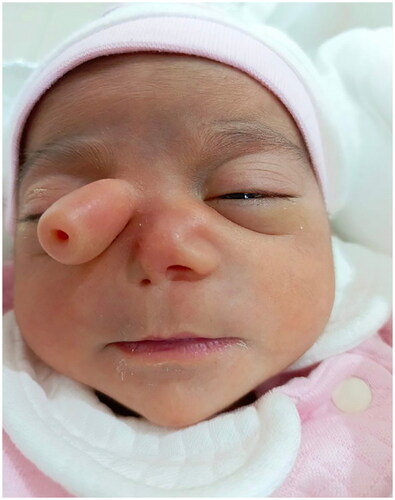
Her case was later documented by a medical team in Damascus and published on June 21, 2025, in the scientific journal Acta Oto-Laryngologica Case Reports. To protect the baby’s privacy, her name and identity were never made public.
What Is Lateral Proboscis?
The baby was diagnosed with a condition called lateral proboscis (also known as proboscis lateralis). It is a congenital malformation, meaning it develops before birth.
In the earliest weeks of pregnancy, a baby’s face forms from several small sections of tissue that grow toward each other and fuse together. The nose develops from paired structures that later become the left and right nasal passages. In lateral proboscis, the development on one side goes wrong. Instead of forming a normal half of the nose, the tissue grows into a narrow, tube-shaped appendage, usually attached near the inner corner of the eye.
The result is a face where one side of the nose looks normal, while the other side is partly or completely missing, replaced by this unusual “trunk.”
Doctors still do not fully understand why it happens. Researchers believe it is a disruption in early facial development, but no single clear cause has been confirmed.
What Doctors Found
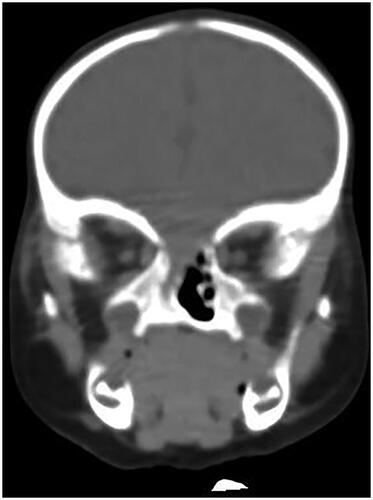
The medical team carried out a careful examination, including CT imaging of the baby’s skull and face. The scans showed that the tube-like structure measured approximately 2.5 centimeters, and that the right nasal cavity had not fully developed.
Lateral proboscis is often linked to other problems, especially involving the eye on the same side, the tear ducts, or the bones around the eye socket. In some reported cases around the world, children have also had smaller eyes or other facial abnormalities.
In this baby’s case, however, there was good news. The doctors found no other major malformations in the organs they examined. Apart from the proboscis and the underdeveloped nasal cavity, she appeared to be developing normally.
Why Surgery Was Postponed
Many people’s first reaction is to ask: why not simply remove it?
The answer lies in how delicate this kind of surgery is. Reconstructing a baby’s nose and the area around the eye is complex work, often involving multiple specialists such as ear-nose-throat surgeons, eye doctors and craniofacial plastic surgeons. Operating on a baby only a few weeks old carries additional risks, and the face is still growing rapidly.
For these reasons, the medical team decided to postpone surgery and wait until the baby is older and stronger.
There is another surprising reason doctors often take their time. That strange-looking “trunk” is not useless. Surgeons who treat this condition have noted that the proboscis itself can be valuable material for reconstruction. Its skin and tissue can sometimes be used to help rebuild the missing side of the nose, which is why treatment is usually carefully planned in stages rather than rushed. pafmj
How Rare Is It?
Lateral proboscis is extremely rare, with only a limited number of cases described in medical literature worldwide. According to the researchers, this baby’s case is the first documented in Syria and, to the best of their knowledge, in the broader Middle East. uitm
Similar cases have appeared elsewhere. In the United States, doctors described a newborn with a tubular appendage measuring 2.75 cm long and 1 cm wide, whose operation was planned for 11 months of age and involved complete removal of the proboscis. In Indonesia, a 7-year-old girl with the condition underwent three major surgeries to reconstruct her face. Proboscis lateralis in a newborn +2
What Happens Next?
For this little girl, the road ahead will likely include close monitoring as she grows, followed by one or more carefully planned surgeries to reconstruct her nose and improve both function and appearance.
Cases like hers are rarely seen, which is exactly why doctors chose to publish it. Each documented case helps physicians around the world better understand the condition, recognize it earlier, and plan safer treatments for the children who are born with it.
Behind the shocking photo is a baby girl who is otherwise healthy, a family facing a difficult journey, and a medical team working to give her the best possible future.