He Was Born Without a Nose, but His Family Saw So Much More—Remembering Eli Thompson
When Brandi McGlathery looked closely at her newborn son, she noticed something the preparations for his arrival had not led her to expect. He did not have a nose.
Eli Thompson was born in Alabama on March 4, 2015, with an exceptionally rare condition called complete congenital arhinia. Reports about his birth traveled around the world, bringing attention to a little boy whose appearance was immediately distinctive.
But the story of Eli’s life cannot be told by that first discovery alone. His family described a happy child who connected with people, inspired affection, and became known for the warmth he brought into their lives.
He died on June 3, 2017, at two years old, according to his family’s published obituary. This is a remembrance of his life, rather than an update about a child still awaiting treatment.
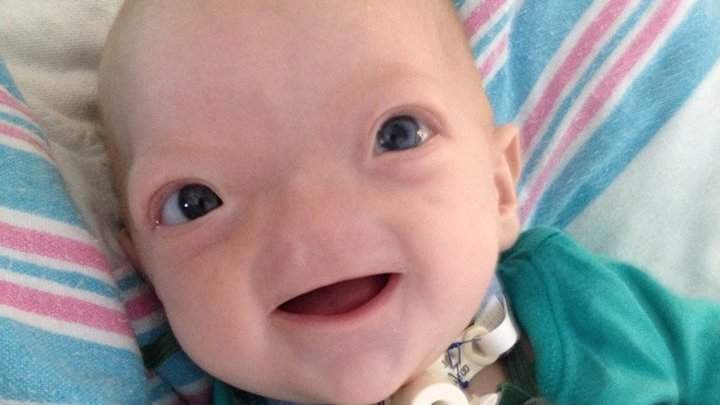
The moment his mother noticed
McGlathery later described the birth in interviews with reporters. She said her pregnancy scans had not prepared her for the absence of her baby’s nose. When he was placed on her chest, she looked at him and realized something was different.
In her account to ABC News, her words were simple: “He doesn’t have a nose.”
The discovery brought fear and questions. His obstetrician, Dr. R. Craig Brown, told the network that he had encountered other facial differences but had not previously seen a case like Eli’s.
For his mother, the concern extended beyond understanding a diagnosis. She worried about whether her baby would survive and what his life might be like. Those worries existed alongside a clear feeling about the child himself: he was her son, and she loved him.
The early interviews show a parent trying to absorb unexpected medical information while also beginning the ordinary, powerful work of getting to know her baby.
More than a difference in appearance
Eli’s condition involved more than the external shape of a nose. Reports described the absence of nasal passages as well, making his breathing needs a central part of his early care.
He received a tracheostomy when he was five days old, according to the family obituary. The opening and tube provided a way to support his breathing. His family also had to learn how to manage the equipment involved in his care.
That distinction is important when looking back at the photographs. The visible difference was what attracted public attention, while much of the practical work involved needs that could not be understood from his face alone.
McGlathery told ABC News that relatives received training in his equipment and CPR. Bringing him home meant preparing to care for a baby with particular medical needs, as well as welcoming a new member of the household.
He came home at the end of March 2015. His mother described him as happy and spoke warmly about his personality. The interviews offered something the striking headlines could not: a glimpse of how his family was beginning to know him.
A mother’s hope for how others would see him
As his story spread, McGlathery also spoke about a different kind of concern. She worried about the possibility that people might make fun of her son as he grew older. She did not want pity to define the way others treated him either.
Those were fears about the future, not reports that Eli had already endured years of bullying. Remembering the distinction keeps the story faithful to what his mother actually shared.
In the Associated Press account of the family’s early experience, she said they thought he was perfect as he was. She wanted to avoid unnecessary changes to his face while he was too young to express what he wanted himself.
Her position did not erase his medical needs. It separated the care he required from the question of whether he needed to look different in order to be cherished.
A parent can learn unfamiliar equipment, ask difficult questions, and seek specialist help while also wanting the rest of the world to recognize a child worthy of affection exactly as he is. Eli’s mother expressed both kinds of care.
The news his family never wanted to share
In June 2017, reports about Eli changed from accounts of his childhood to announcements of his death.
His father, Jeremy Finch, shared the family’s grief publicly and expressed gratitude for having had his little boy in his life. In the message reproduced by contemporary reporting, he also remembered Eli’s fist bumps—an affectionate, personal detail amid the sorrow.
That memory brings the story close to the people who knew him. A diagnosis could explain why strangers first learned his name. A familiar greeting could explain some of what his father would miss.
The family obituary identified him as Timothy Eli Finch, while the wider public had come to know him as Eli Thompson. It described his death as the result of a medical emergency. A detailed medical cause was not established in the public reporting used for this remembrance, so his condition alone should not be treated as an explanation for his death.
The obituary remembered a happy little boy who made friends and asked people to continue sharing the love and joy associated with his life.
Remembering the child behind the headlines
Eli’s photographs remain recognizable years later. They can still prompt the same immediate question that brought his story to public attention: what happened to the baby born without a nose?
The answer includes profound sadness. He had only two years with his family, and the future they had imagined for him was cut short.
It also includes their accounts of happiness, affection, and connection. Those memories deserve a place beside the medical details. They tell readers that the little boy in the photograph was known, cared for, and missed for reasons that went far beyond his appearance.
His mother’s early interviews and his family’s later tribute belong to the same story. From the beginning, she wanted people to see a child deserving love. At the end of his life, his family asked people to remember the joy he had shared.
Eli’s time was short. The affection described by those who loved him was not.
Remembering him means allowing the photograph to introduce his story, then listening to his family tell us who he was.