She Built a Way to Walk Beside Her Son—Years Later, He Was the One Getting People Moving
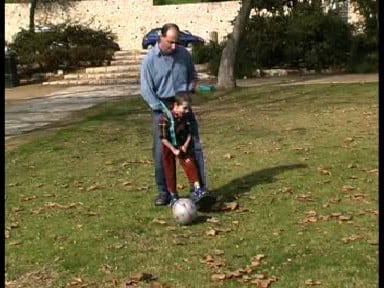
The childhood photograph shows a little boy outside with his father and a ball. A harness supports him, joining his movement to the adult standing behind him. It is an image of assistance, but it is also an image of something much more familiar: a parent and child finding a way to play together.
The boy is Rotem Elnatan. His mother, Debby, developed an early version of the device that later became the Firefly Upsee. When the product reached international attention in 2014, the invention was only one part of the family’s much longer story.
Another photograph from that year shows Rotem working with music equipment. By then he was nineteen, and he had discovered a different way to get people moving.
Starting with the day in front of them
Rotem has cerebral palsy. When he was young, his mother wanted him to experience more of the world around him with physical support. Helping a small child take steps could involve an awkward, strenuous position for the adult, so Debby began looking for another arrangement.
The solution developed from a problem encountered in daily family life. She needed a way to support her child’s body while moving with him, leaving their hands free for other things.
An adult belt, a supporting child harness, and connected sandals became the essential elements of the idea. Their purpose was shared movement. The adult could provide support while the child experienced standing and stepping as part of an activity.
For a family, the destination might be modest. A place outside. A ball. The chance to be beside someone at a different height. The value of an outing does not have to depend on whether it becomes a dramatic milestone.
From one family’s equipment to Upsee
Debby continued making and adapting equipment as her son’s needs changed. The design that became Upsee went through development over many years before reaching a wider market through Leckey and its Firefly brand in 2014.
Contemporary coverage followed both the inventor and families trying the product. It described a device intended to make participation possible with assistance, rather than announcing a cure for a neurological condition.
That is an essential distinction. Supported stepping does not establish that a child can walk independently, and a photograph cannot tell us what long-term mobility will look like for a particular person.
Debby’s own explanation emphasized the childhood experience: opportunities to go somewhere, interact, and explore. The story of the harness is more accurate when those experiences remain at its center.
It also remains personal. The device existed because she had been looking closely at the daily life of her son.
The circle of support grew
The launch also introduced families who were trying Upsee with their own children. Among them were Nomi Avner and her son Amichai, whose sister Atara could share time beside him while he stood with support.
Nomi described the importance of that interaction in the contemporary report. The practical equipment created a different opportunity for siblings to be together, with the adult still providing the assistance the child needed.
Her experience gave the project another family’s perspective. Debby’s original effort had begun with Rotem; the later device was now being tried in households with different people, interests, and daily routines.
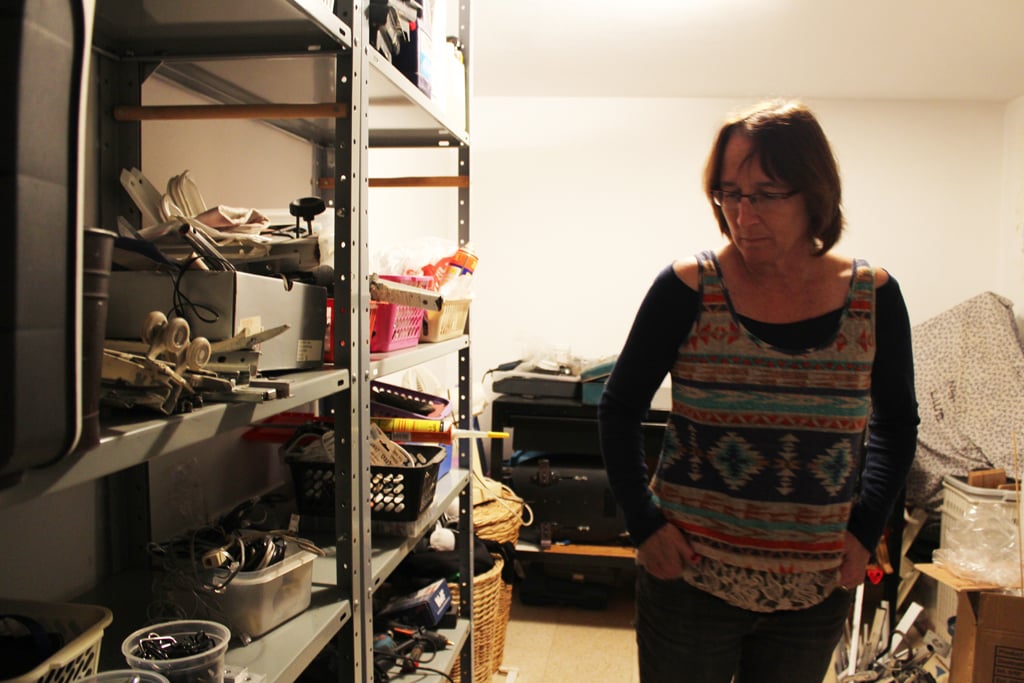
At the Elnatans’ home, support had its own familiar expressions. Debby’s workroom was filled with equipment and materials. Elsewhere, music connected parents and children. Zohar played guitar, Debby held a violin, and the boys joined the family gathering.
The invention and the music belonged to the same larger effort: finding ways for each family member to participate in life together.
Growing beyond the first headline
When a reporter visited the Elnatans in 2014, Rotem was nineteen. The report described his interest in languages, music, social life, and the future. His wheelchair was visible, but it did not explain everything he wanted or enjoyed.
Music was a family language. Debby and Zohar worked with music, his brothers played instruments, and Rotem enjoyed DJing. A photograph shows him smiling over a controller beside a laptop, absorbed in what he is doing.
That is the development behind the promise of getting other people moving. Rotem could choose and shape music that made an audience dance.
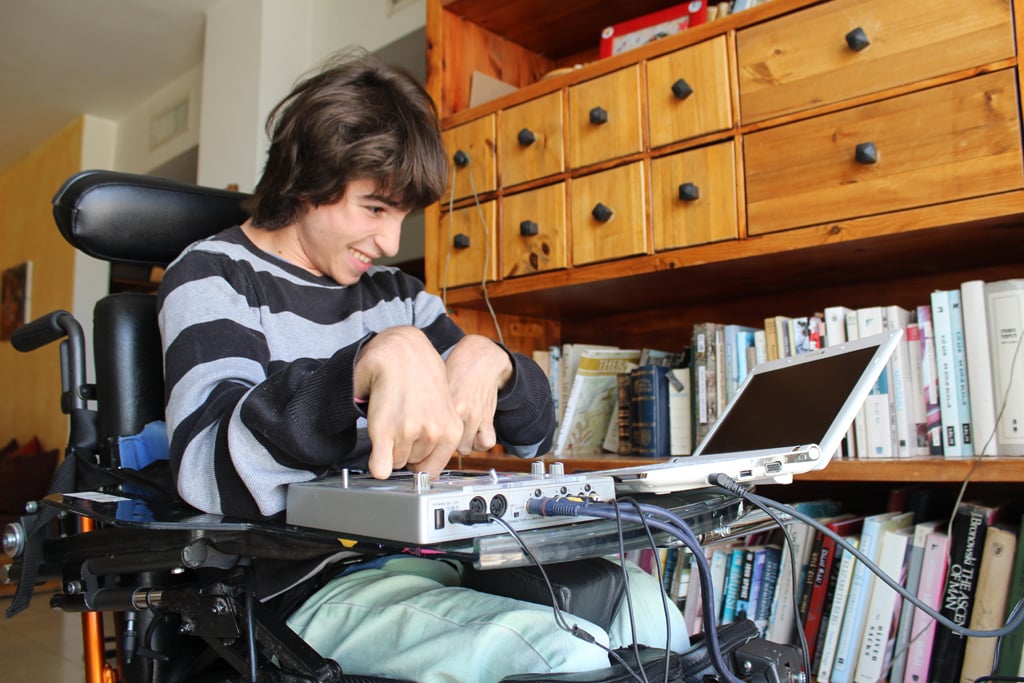
The contrast is appealing because it grows from his own interests. A child once supported through steps had become a young man contributing something other people could share. It does not require a claim that his disability had disappeared.
The report gives him room to be funny, opinionated, and interested in ordinary pleasures. Those details allow the person behind the invention to become visible.
A parent’s role can change without ending
Debby’s early work involved supporting Rotem’s movement directly. Later, the family found other ways to help him participate in activities that mattered to him. The form of support changed with the child who was growing up.
There is a useful lesson in that progression, without turning this family’s experience into a medical prescription for another one. Listening, adapting, and noticing a person’s interests are ongoing tasks. A piece of equipment is one practical expression of them.
An outing can matter even when it does not lead to independent walking. Music can matter without becoming proof of recovery. A young person’s enjoyment and participation have value in their own right.
This article revisits the family’s story as reported around the Upsee’s 2014 launch. Rotem’s age and the experiences described here belong to that period, rather than to a current medical assessment.
The early photograph still holds its warmth: a father, a child, a ball, and a way of sharing movement. The later photograph adds something the first could never have shown. Rotem has a hand on his music equipment, and this time the rhythm is his to choose.