The Airport K9 Wouldn’t Leave the Boy—Because His Mother Trained Him
Part 1
Luis Ortega didn’t hand the passport back.
He keyed his shoulder radio and requested a supervisor at secondary screening. For exactly one second, the woman beside Mason went pale under her makeup. Then she smiled.
“This is ridiculous. I’m his stepmother. Call his father.”
“Believe me, ma’am,” Luis said. “I’m about to.”
Twenty miles away, at the CTA rail shop in Skokie, Ryan Hayes was elbow-deep in the brake assembly of a Yellow Line car when his phone lit up with a name he hadn’t seen in four years.
Luis Ortega.
Ryan almost let it ring out. The last time Luis called him, it was 2:14 in the morning and a department chaplain was standing on his porch.
“Ryan.” Luis’s voice was careful. “I’m at O’Hare. Mason’s here. He’s safe. But you need to come right now.”
“O’Hare? He’s at school. Vanessa dropped him off at school.”
A pause.
“Ryan. They have one-way tickets to Dubai.”
He made the drive down the Kennedy in thirty-one minutes, through sleet, with his hazards on and his heart trying to climb out of his throat.
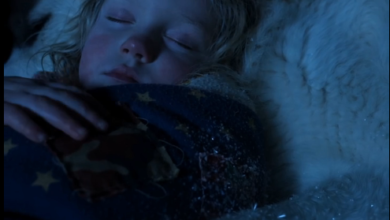
The secondary screening room was small and beige, with a humming vending machine and a single framed poster about liquids. Mason sat on a plastic chair with his feet off the floor. Bravo lay across them like a sandbag.
When Mason saw his father, his whole face crumpled. “Dad.”
Ryan dropped to his knees and held him. Over his son’s shoulder he saw Vanessa standing by the window with her arms crossed, looking wounded, patient, and wronged, all at once.
“Ryan, thank God,” she said. “Please tell them. We talked about this.”
“Talked about what?”
“The job offer. Al Zahra Hospital. We sat at the kitchen table two Sundays ago, and you signed the consent letter. You said a few months overseas would be good for him.” Her voice wobbled. “You said it would be good for us.”
Luis slid the letter across the table. Notarized. Permanent relocation. At the bottom, Ryan’s own signature, the loopy R he’d been writing since fourth grade.
Ryan stared at it.
He remembered a Sunday. He remembered Vanessa bringing him coffee and a stack of papers. School field trip waiver, passport renewal, the usual boring stuff, babe. He remembered being tired. He had been tired for four years. Since the funeral, the doctor had kept him on a prescription sleep aid, and some mornings he couldn’t remember whether he’d locked the door the night before.
Had she told him? Had he said yes and forgotten?
“And the passport?” Luis asked quietly. “Dana Kessler?”
“It’s my legal name,” Vanessa said, almost laughing. “Dana Vanessa Kessler. I’ve gone by my middle name since high school. I never updated my passport after the wedding. Do you know how long that takes?”
It sounded reasonable. Everything she said always sounded reasonable.
Ryan revoked the consent right there, in writing, with a shaking hand. The flight left without them. Vanessa didn’t argue. She squeezed his arm and said, “Okay. Okay, we’ll talk at home.” Somehow that frightened him more than a fight would have.
In the parking garage, Luis caught his sleeve.
“The last night Jenna was on the radio,” he said, very low, “she called in a name. Kessler. Then the channel went dead.”
“Kessler’s a common name, Luis.”
“I know.”
Ryan buckled Mason into the back seat. Bravo had followed them all the way to the car, and Luis had to pull him back by the harness.
As Ryan started the engine, Mason leaned forward and whispered, so Vanessa couldn’t hear from the passenger seat:
“Dad. Right before Bravo came, somebody in the airport whistled. Two short, one long.”
He swallowed.
“That’s Mom’s whistle. Only Mom ever did that.”
Part 2
Four years earlier. February. Bridgeport.
The kitchen smelled like burnt grilled cheese, and Jenna Hayes was on the floor in her uniform pants and an old Cubs sweatshirt, teaching a four-year-old to whistle.
“Two short,” she said, and did it. “One long.”
Across the room, Bravo rose from his bed and limped over. His front left paw was wrapped in white gauze from a broken bottle at the park. He lay down across Mason’s socks and put his nose in the boy’s palm.
Mason shrieked with joy.
“Guard Bug,” Jenna told Ryan, grinning. “That’s his new job.”
“He’s a narcotics dog, Jen.”
“Not tonight. Tonight he’s staying home with that paw.” She stood and grabbed her keys. “Unit Seven’s in the shop, so I’m taking the Jeep.”
“The red one? For work?”
“It’s one surveillance run, Ry. I’ll be home by two.” She kissed him, then knelt and kissed Mason on the freckle under his eye. “When you hear two short and one long, it means Mom’s coming back. Okay, Bug?”
“Okay.”
At the door she turned around, and something crossed her face that he wouldn’t understand for years.
“If I ever don’t come home,” she said lightly, “Luis knows things. Trust Luis.”
“That’s dark.”
“That’s cop life.” She winked. “Love you. Both of you. All three of you.”
The red Jeep pulled away under the streetlight.
At 1:52 a.m., it went off the Ewing Avenue Bridge.
Part 3
Vanessa didn’t bring it up that night, or the next.
She made spaghetti. She helped Mason with his spelling words. She sat on the edge of the bathtub while Ryan brushed his teeth and cried quietly, and said she understood why he was scared, and that she would never, ever take Mason anywhere he didn’t want.
On Wednesday she showed him everything.
Round-trip tickets on a separate airline, booked for three weeks later. A hotel confirmation. An offer letter on Al Zahra Hospital letterhead for a pediatric nurse position. And a birth certificate: Dana Vanessa Kessler, born Tucson, Arizona, 1990.
“The ‘permanent’ thing was the lawyer’s template,” she said. “I should have read it more carefully. That’s on me.” Her eyes filled. “I’ve been raising your son for two years, Ryan. I love him like he came out of me.”
Luis called that afternoon. His voice was flat.
“I pulled Jenna’s old case file. The Kessler she was looking at was a courier for a money-laundering crew out of Gary. Dana Kessler, fifty-one. Died of cancer in 2019.” A pause. “Not your wife. Different woman.”
Ryan closed his eyes. The relief felt like a kind of drowning.
That night Vanessa laid a manila envelope on the kitchen table.
“I didn’t want to show you this,” she said. “But you need to know who’s been filling your head.”
Photographs. Dozens of them. Grainy, taken from inside a car. A dark Chevy Tahoe parked across from their house on Lowe Avenue. At night. In summer. In snow. Over and over, for years. In one, the driver’s face was clear in the glow of a streetlight.
Luis Ortega.
“The neighbors started noticing a year ago,” Vanessa said softly. “I hired someone. Ryan, that man has been watching this house since the funeral. He was in love with her. Everyone at her precinct knew it. And now he’s got her dog, and he’s got a story about a name on a radio that nobody else ever heard.”
Ryan couldn’t breathe.
The next morning he drove to Luis’s apartment in Garfield Ridge and threw the photos on the hood of his Tahoe.
“Explain this.”
Luis looked at them for a long time. Bravo sat at his side, watching Ryan.
“Yeah,” Luis said finally. “I watched your house. Almost every night for four years.”
“Why?”
Luis met his eyes.
“Because Jenna asked me to.”
Part 4
“She’s dead, Luis.” Ryan’s voice cracked on the word. “She asked you when?”
“Two weeks before the bridge.” Luis unlocked his apartment door. “Come inside. I’ve been waiting four years to open something.”
The apartment was bare except for a couch, a TV, and a dog bed with Bravo’s name stitched on it. Luis went to the closet, knelt, and pried up a loose floorboard. He pulled out an envelope sealed with packing tape. In Jenna’s handwriting, across the front:
Luis — open ONLY if a Kessler comes near my family.
“She made me swear,” Luis said. “She said if nobody named Kessler ever showed up, I should burn it on Bug’s eighteenth birthday. So I watched the house. Every night. In case.”
Ryan’s hands shook as he tore the tape.
Inside were four pages of Jenna’s notes and a single printed photograph.
Target: “D.K.” Female, 30s. Courier and bookkeeper for Gary crew. Moves cash through O’Hare. Never uses her real name. Specializes in the identities of the DEAD. Pulls birth records of infants who died young and builds new people out of them. Has used Dana Kessler (deceased, Gary, 2019) as a working alias. Identifying mark: small hummingbird tattoo, inside left wrist.
The photo was a blurry frame from an airport security camera. A woman with a rolling suitcase, her left hand on the handle. On the inside of her wrist, a dark shape.
A hummingbird.
Vanessa had a hummingbird tattoo on the inside of her left wrist. She said it was for her little brother, who died when he was nine.
Ryan felt the floor tilt.
“Tucson,” he said. “The birth certificate. 1990.”
Luis was already typing on his phone. He had a friend in Arizona vital records. It took two hours and one favor.
Dana Marie Kessler. Born Tucson, March 1990. Died of pneumonia, January 1991. Eleven months old.
Vanessa hadn’t changed her name.
She had stolen a dead baby’s.
Ryan drove home at noon, when she would be at the clinic. He went through her desk drawer by drawer. At the back of the bottom one, inside a tampon box, he found a folder.
A life insurance policy on Ryan Hayes, issued five months ago. Two million dollars. Sole beneficiary: Vanessa Hayes.
An amendment to Mason’s trust. The trust held Jenna’s line-of-duty death benefits and her pension, nearly one point four million dollars. The amendment named Vanessa successor trustee “in the event of the primary trustee’s death or incapacity.” His loopy R at the bottom.
An Emirates booking confirmation. One way. Purchased in October.
And a burner phone, still on. One message, from a contact saved only as G:
UAE doesn’t return kids. Once the boy’s out, the father can have his accident.
Ryan stood very still in the silent house.
Then he heard the front door open.
“Honey?” Vanessa’s voice floated down the hallway, warm and easy. “You’re home early. Find what you were looking for?”
Part 5
She was smiling when she walked into the room.
She looked at the open drawer, the folder in his hands, the phone. Her smile didn’t change at all.
“Ryan,” she said gently. “Put that down. You’re not well.”
“Where’s Mason?”
“At school. Where else would he be?”
He shoved past her. He had the folder, the burner phone, and his car keys. He was on the porch before he realized his own phone was still on the kitchen counter, and that she had watched him leave it there.
He didn’t go back.
Jenna’s notes had ended with one more line: Full case notebook in storage. Cicero, U-Store, unit 214. Code is Bug’s birthday. If the police wouldn’t believe a grieving husband on sleeping pills, maybe they’d believe a dead cop’s handwriting.
The storage lot in Cicero was empty in the gray afternoon. Unit 214 was at the far end of the last row. Ryan punched in the code, rolled the door up, and stepped into four years of dust.
Jenna’s things. Her bike. Her box of academy photos. A plastic crate labeled CASE in black marker.
He was kneeling beside it when the overhead bulb went out.
Behind him, the steel door slammed down with a crash that rang in his teeth.
He threw himself against it. Locked from the outside. He pounded until his fists ached, until his voice gave out, until the cold started coming up through the concrete into his knees.
Through the gap at the bottom of the door, he heard boots on gravel. Then a voice, calm and almost kind.
“The pills made you confused, baby. You wandered off. That’s what I’ll tell them.” A pause. “Mason and I will light a candle for you.”
The boots walked away. A car started.
The temperature that night dropped to six degrees.
Ryan wrapped himself in Jenna’s old police-academy blanket and sat against the crate, shaking, whispering his son’s name into the dark. Somewhere after midnight he stopped feeling his toes. Somewhere after that he stopped being afraid, and that was when he knew he was in real trouble.
Then he heard it.
A scratching at the bottom of the door. A whine. A frantic bark he’d have known anywhere.
Bravo.
The lock clanked. The door rolled up. Frozen air and a flashlight beam hit him in the face.
The person holding the flashlight wasn’t Luis.
She was thinner. Her hair was dark now, cut short. There was a scar through her lip that hadn’t been there before. But when she lowered the light and knelt in front of him, it was the face he’d buried four years ago.
“Hey, Ry,” Jenna Hayes said.
Part 6
She drove. He sat in the passenger seat of Luis’s Tahoe with the heat on full, and for twenty minutes neither of them said anything, because there was no first sentence big enough.
Finally he said, “You let me bury you.”
“I know.”
“I picked out the casket, Jenna. Mason put his dinosaur in it.”
“I know.” Her hands were tight on the wheel. “I was there. At the back of the church, in a wig, with two FBI agents standing next to me.”
She told him everything, and she didn’t make it pretty.
That night, a car had rammed the red Jeep on the Ewing Avenue Bridge and pushed her through the rail. She got out through the window, underwater, in February. A tugboat crew pulled her out a quarter mile downriver. The FBI had already been working the Gary crew. Someone inside Chicago PD records had been leaking to them, so the Bureau made her an offer. Stay dead. Testify later. Keep your family out of the line of fire.
“Eighteen months, they said. Then it was two years. Then the insider still wasn’t identified, and it was three.” She wiped her face with the heel of her hand. “I said yes, Ryan. Nobody forced me. I chose the case, and I told myself I was choosing you.”
“And Vanessa?”
Jenna was quiet for a long time.
“I knew,” she said. “For a year. I saw her picture in the Tribune. ‘Police widower finds love again.’ I saw the tattoo.” She couldn’t look at him. “The Bureau asked me to let it ride. She was the closest anyone had ever gotten to the money man. She was talking to him. They were building the case through our house. So I said yes again.” Her voice broke. “I let my son live with the woman who tried to kill me, because I wanted to finish it right.”
Ryan stared out the window at the frozen city.
He wanted to scream at her. He wanted to hold her. He did neither.
“The whistle at O’Hare,” he said. “That was you.”
“Luis texted me when he saw the boarding passes. I was in the terminal in eleven minutes. I broke every rule they gave me. I didn’t care.” She finally looked at him. “The Bureau wanted to let the flight go and track her in Dubai. I wasn’t letting my kid get on that plane.”
“Where’s Mason now?”
Jenna’s jaw tightened.
“With her. She pulled him out of school at noon and told them you’d relapsed. The Bureau has eyes on them. They still want to wait for the money man to show.” She turned onto Lake Shore Drive. “But tomorrow at ten, the city is unveiling the new K9 memorial at Soldier Field. They’re putting my name on it. And the woman who ran me off that bridge is going to stand up there with my son and accept a plaque on behalf of my family.”
“And then?”
“And then a private charter out of Gary at two o’clock.” Jenna’s voice went very quiet. “The only way to stop her before she gets him to that plane is to let the whole city see that I’m alive.”
Part 7
The Gold Star Families Memorial was crowded with blue. Two hundred officers stood in dress uniform, their breath fogging, with families, reporters, and a line of K9 handlers along the front row. A granite statue of a German Shepherd stood under a white cloth.
Vanessa stood at the podium in a black wool coat with Mason beside her in a tiny tie.
“I never had the honor of meeting Officer Jenna Hayes,” she said, and her voice trembled beautifully. “But I’ve had the honor of raising her son. Every day, I try to be the mother she would have wanted him to have.”
People dabbed their eyes. A deputy chief put his hand over his heart.
Ryan walked down the center aisle.
Heads turned. Vanessa saw him and didn’t miss a beat.
“Ryan.” Her voice filled with pity. “Honey, you shouldn’t be here. You’re not well.” She turned to the crowd. “My husband has been struggling. Please—someone help him.”
Two officers stepped forward. Luis stepped in front of them with Bravo, and they stopped.
“She’s not who she says she is,” Ryan said. His voice carried across the cold. “The night Jenna died, somebody rammed her off the Ewing Avenue Bridge. It wasn’t an accident. And the person who did it is standing at that podium.”
A shocked murmur ran through the crowd.
Vanessa laughed, disbelieving and hurt. “That’s insane. I was living in Phoenix that year. I’d never even been to Chicago.” She gripped the podium. “And nobody could push a red Jeep off a bridge that size without a dozen people seeing—”
She stopped.
The silence spread outward from the front row like a crack across ice.
Luis spoke quietly, but everyone heard. “The official report says Officer Hayes was in her squad car. Unit Seven. So does every news story. So does that plaque you’re holding.” He looked at her. “Only her husband, her partner, and the driver who hit her ever knew she was in the red Jeep.”
Vanessa’s hand moved toward Mason’s shoulder.
From the back of the crowd came a whistle.
Two short.
One long.
Bravo tore loose from Luis’s hand, crossed the plaza in five strides, and lay across Mason’s shoes, his body a wall between the boy and the woman.
The crowd parted.
A woman in a gray hoodie walked down the aisle and pushed the hood back. Some of the older officers recognized her before she reached the front. One sergeant sat down hard on a folding chair.
“Hi, Bug,” Jenna said.
Vanessa ran.
She made it about ten yards before two FBI agents in overcoats stepped out of the crowd. When they turned her wrist to cuff her, the inside of it showed plainly under the gray sky.
A small hummingbird.
Mason didn’t move. He stood with Bravo across his feet, staring at the woman who had his freckle, as if she might dissolve if he blinked.
His lip shook.
“If you were alive,” he said, “why didn’t you come home?”
Part 8
The woman who called herself Vanessa Hayes had used five names in fifteen years. None of them were hers. In federal court that summer, she faced charges of attempted murder of a police officer, identity theft, wire fraud, and attempted international parental kidnapping. The burner phone led the FBI to “G,” a Gary businessman who had laundered drug money through the crew for a decade. It also led them to the leak inside Chicago PD records: a civilian clerk, who resigned the day before she was arrested.
The insurance policy was voided. The trust amendment was thrown out. The judge called Ryan’s signatures “obtained through deliberate deception of an impaired and grieving man.” Ryan read that line in the courtroom and cried, because someone had finally said out loud that it hadn’t been his fault.
He stopped taking the sleeping pills that spring. He started sleeping anyway.
None of it fixed itself fast. Jenna moved into the apartment above her mother’s place on Halsted, two blocks away. Mason refused to see her for three weeks. Then for a month he would only talk to her through the screen door. Ryan and Jenna went to counseling on Thursdays. Some sessions they didn’t speak at all. Some they couldn’t stop.
Bravo retired in April. The department gave him a medal and a certificate. Luis gave him back.
“He was never really mine,” Luis said at the handoff, scratching the notch in Bravo’s ear. “He was just waiting.”
* * *
On the first warm evening in June, Ryan stood at the kitchen window of the house on Lowe Avenue and watched the backyard.
Jenna sat cross-legged in the grass. Bravo lay beside her, gray around the muzzle, tail thumping slowly.
Mason walked out the back door. He stopped a few feet away. For a long moment he just looked at her. The scar through her lip. The short hair. The freckle.
Then he put two fingers to his mouth.
Two short.
One long.
Bravo got up, stiff and slow, crossed the grass, and lay down across Jenna’s feet. He pressed his nose into her palm and held it there.
Jenna looked up at her son. Her eyes were full.
“What does that mean?” she whispered. “When you do it?”
Mason sat down next to her in the grass. After a while, he leaned his head against her shoulder.
“It means guard Mom,” he said. “So she can’t leave again.”