Part 2: The Elderly Man Was Mistaken for a Beggar Outside a Five-Star Hotel — Then a Little Boy Did Something That Made Everyone Lower Their Heads
The lobby fell quiet in a way that no announcement could have achieved.
The floor manager, Adrian Cole, turned toward the photograph behind the desk.
It had hung there for years beneath a brass plaque describing the Grand Linden’s history.
Most employees passed it several times a day without studying the faces.
The picture had been taken during a flood in the summer of 1986.
Water covered the street outside the hotel. The lobby doors stood open. Firefighters moved through the background carrying ropes and blankets.
At the center of the image, a younger man in a soaked bellman’s uniform held a small boy against his chest.
The child had one arm wrapped around the man’s neck.
The younger man was Walter Hayes.
The boy was Noah’s father, Daniel Whitmore.
Adrian looked at Walter again.
The old man had lowered himself slowly into the chair Noah brought outside. His hands trembled slightly as he rested the lunchbox across his knees.
Noah opened the umbrella and angled it carefully so rain would not reach Walter’s shoulders.
“You do not have to stand out here,” Noah said. “There are lots of chairs inside.”
Walter smiled faintly.
“I am wet, son. Those floors are polished enough already.”
The answer made several guests glance toward the marble tiles beneath their shoes.
Walter had not refused to enter because he was angry.
He had been trying not to make a mess.
Daniel Whitmore crossed the lobby quickly when he heard his son calling.
At forty-six, Daniel had inherited the Grand Linden from his father and spent most evenings moving between meetings, vendors, and guests.
He stopped several feet from Walter.
For a moment, neither man spoke.
Then Daniel said, “Mr. Hayes?”
Walter removed his cap.
His silver hair was flattened by the rain.
“Hello, Danny.”
No one had called Daniel that inside the hotel for decades.
Daniel looked toward the old photograph.
He seemed younger for a second.
“I did not know you were coming tonight.”
Walter shifted the lunchbox on his knees.
“I was not invited to the party.”
Daniel’s expression tightened.
“You never need an invitation.”
Walter looked past him toward the chandeliers, white tablecloths, and trays of champagne.
“I did not come for the party.”
Adrian stepped closer.
“I apologize, Mr. Hayes. I misunderstood the situation.”
Walter nodded once.
He did not seem interested in embarrassing anyone.
Daniel pointed toward the lobby.
“Please come inside.”
Walter remained seated.
“I need to speak to someone from housekeeping first.”
A woman near the service hallway turned at the sound of those words.
Her name was Rosa Martinez.
She was fifty-two and wore a dark housekeeping uniform beneath a gray cardigan.
When she saw Walter, one hand rose instinctively toward her mouth.
“You came in this weather?” she asked.
Walter lifted the dented lunchbox.
“I told Rose I would bring it.”
Rosa looked at the box, then at Walter.
“Walter, you did not have to do this now.”
“I waited too long already.”
Daniel watched the exchange with confusion.
Walter opened the metal clasp.
Inside were several envelopes bound together with a piece of blue ribbon.
On top lay a folded note written in delicate handwriting.
The paper had softened along the creases from being opened and closed many times.
Daniel recognized the name signed at the bottom.
Rose Hayes.
Walter’s wife had worked in the hotel laundry room for more than thirty years.
She had died eight months earlier.
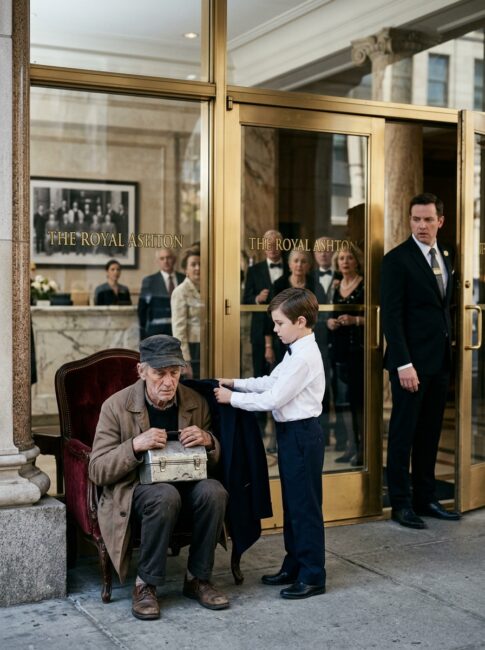
Walter had started working at the Grand Linden when he was twenty-two years old.
He carried luggage, hailed taxis, held umbrellas over guests, and remembered the names of children who returned each summer with taller shoes and missing front teeth.
Rose joined the hotel laundry staff four years later.
She repaired torn table linens by hand and carried peppermints in the pocket of her uniform for nervous brides.
They met near the service elevator.
They married in a small church three blocks from the hotel.
For most of their lives, the Grand Linden was more than a workplace.
It was the place where they spent holidays, missed dinners, exchanged notes between shifts, and raised two daughters on modest paychecks.
Daniel had known Walter since childhood.
During the flood in 1986, Daniel was six years old.
His father had brought him to the hotel because school was closed and his babysitter could not reach their home.
When floodwater rushed through the lower entrance, Daniel became separated from his father in the confusion.
Walter found him near the service corridor.
The water was rising quickly.
He carried Daniel through the lobby and handed him to a firefighter outside.
The photograph was printed in the local newspaper the following morning.
Walter never framed a copy.
He always said the firefighters had done the difficult work.
Daniel remembered the photograph.
He remembered Walter lifting him from the water.
But he did not know what was inside the lunchbox.
Rosa did.
After Walter retired, he and Rose began placing a small portion of their pension into envelopes each month.
Some months, it was twenty dollars.
Some months, fifty.
When they had enough, Rose quietly passed the envelope to someone on the hotel staff who needed it.
A dishwasher whose car had broken down.
A housekeeper whose electric bill was overdue.
A young server buying medication for her father.
A cook whose apartment building had caught fire.
They never used their names.
Rose wrote only three words on each envelope.
For a rainy day.
The money was not charity in the way people usually imagined charity.
There were no photographs.
No announcements.
No expectation that anyone say thank you.
Rose believed people should be allowed to receive help without explaining every painful detail of their lives.
“She hated making anyone feel watched,” Walter said.
The rain continued striking the awning while he spoke.
Inside the lunchbox were five envelopes.
Each held money Rose had saved during her final year.
She had continued setting aside small amounts even after she became too ill to work part-time at the church thrift store.
One envelope had Rosa’s name written on it.
Her grandson needed physical therapy after a serious accident.
Insurance covered some of the cost, but not enough.
Rosa had not asked anyone for help.
Rose had learned about it through a former coworker.
“She wrote your name before she went into the hospital,” Walter said. “I kept thinking I should wait until you were alone.”
Rosa shook her head.
“You should keep it.”
Walter looked at her.
“It was never mine to keep.”
Rosa pressed the envelope against her chest.
Her eyes filled, but she did not cry.
Noah still stood beside Walter, holding the umbrella with both hands.
The boy looked toward the lunchbox.
“Did your wife save all those people?” he asked.
Walter smiled.
“She helped a few people stand up when life knocked them down.”
Noah considered the answer.
“Did anyone help her?”
Walter’s smile faded slightly.
“Sometimes.”
Daniel looked at the wet coat clinging to Walter’s shoulders.
“Not enough,” he said.
The words landed heavily.
Daniel turned toward Adrian.
He did not raise his voice.
He did not need to.
“Why was Mr. Hayes told to leave the awning during a storm?”
Adrian’s face reddened.
“I believed he was asking guests for money.”
Walter glanced toward the folded bill still resting on the table near the entrance.
“I was offered money,” he said. “I did not ask for any.”
Adrian looked down.
“I made an assumption.”
Walter closed the lunchbox.
“Yes,” he said quietly. “You did.”
A guest near the door lowered her eyes.
She had moved around Walter earlier as if he were an inconvenience placed in her path.
The man who offered him cash stepped forward.
“I am sorry,” he said. “I should have asked whether you needed help.”
Walter looked at him without anger.
“You were trying to help.”
The man studied the polished floor.
“I was trying to make the moment easier for myself.”
No one spoke after that.
Noah folded the umbrella slightly and stepped closer to Walter.
“My dad says this hotel belongs to our family,” he said.
Walter nodded.
Noah looked toward the lobby.
“Does that mean we can let people sit inside when it rains?”
Daniel crouched beside his son.
“Yes,” he said. “It does.”
Noah held the door open.
Walter hesitated.
Then Rosa brought a stack of clean towels from the service hallway and placed one across the chair inside the lobby.
“There,” she said. “Now you are not ruining anything.”
Walter looked at her.
Rose would have liked that solution.
He stepped inside.
The guests moved aside quietly.
No one applauded.
Some moments are too fragile for applause.
Daniel carried the lunchbox.
Noah carried the umbrella.
Walter carried only his cap.
The anniversary gala began nearly an hour late.
Most guests did not complain.
Walter had intended to leave after delivering Rose’s envelopes, but Daniel asked him to stay for dinner.
Walter resisted until Noah pointed toward an empty chair beside him.
“I already saved you a seat,” the boy said.
Walter stayed.
He ate slowly and listened while Noah asked questions about the old photograph.
He explained that the lobby had looked different in 1986.
The chandeliers were smaller.
The carpet was darker.
The umbrellas were heavier.
He did not describe himself as brave.
He spoke mostly about people who had carried blankets, brewed coffee, and opened doors while the streets flooded.
Two weeks later, a brass umbrella stand appeared near the Grand Linden’s entrance.
Above it hung a small wooden sign.
For anyone caught in the rain.
Beneath the sign stood a bench with folded towels and paper cups for coffee.
Daniel asked Walter whether the hotel could rename the employee assistance fund after him and Rose.
Walter declined.
Rose would have hated her name displayed too prominently.
Instead, Daniel kept the words she had written on every envelope.
The Rainy Day Fund.
Employees could contribute anonymously.
They could request help privately.
No explanations were posted.
No photographs were taken.
Rosa’s grandson began physical therapy the following month.
Adrian remained at the hotel.
Walter never asked Daniel to fire him.
The next time a soaked delivery driver paused beneath the awning, Adrian opened the lobby door before the man could ask.
“Come inside,” he said. “The coffee is hot.”
Walter visited the hotel occasionally after that.
Sometimes he met Rosa for lunch.
Sometimes he sat beneath the photograph and watched guests pass through the lobby carrying suitcases, umbrellas, flowers, and worries no one else could see.
Noah always looked for him.
One rainy Saturday afternoon, Daniel found his son standing near the entrance.
Noah was placing a folded towel on the bench.
Outside, an elderly woman waited beneath the awning for her ride.
Her coat was damp at the shoulders.
Noah opened the door.
“You can sit inside,” he told her. “You do not have to explain anything.”
The woman smiled and stepped into the lobby.
Across the room, Walter watched quietly.
Beside him rested the old metal lunchbox.
The dents remained.
The blue ribbon remained.
Inside was one new envelope.
On the front, written in Walter’s uneven handwriting, were the same three words Rose had used for years.
For a rainy day.
Follow the page for more heartfelt stories about the small acts of kindness that help people see one another differently.