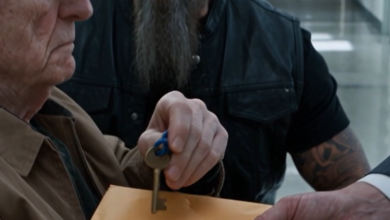
They Threw a Biker Out of His Best Friend’s Funeral—Then the Dead Man’s Daughter Slipped Him an Envelope Her Mother Had Tried to Find All Morning
Jack did not ask Lily to explain in the rain.
He took his hand off the letter, crouched until their faces were level, and asked one question.
“Are you hurt?”
She shook her head.
“Did somebody tell you they were taking you somewhere?”
A nod this time.
Before she could answer, Caroline appeared beneath the cemetery arch. Her black umbrella tipped backward, exposing hair that had been arranged carefully enough to survive the weather.
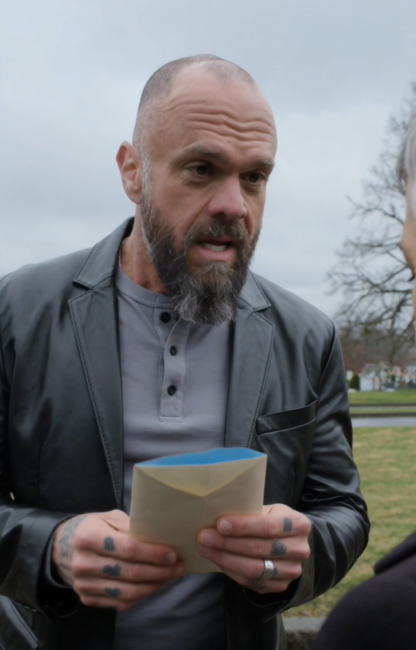
“Lily. Now.”
Jack stood slowly. He was fifty-four, with a bad knee and hands permanently stained around the nails. People often mistook his stillness for a threat. He had spent years learning to announce every movement.
“I’m getting my phone,” he said.
Caroline looked at the envelope.
“That belongs to my husband.”
Lily stepped behind Jack.
The movement hurt more than Caroline’s words. Three months earlier, this child had been comfortable falling asleep against her mother’s shoulder during a school concert.
Caroline was her stepmother, technically. Lily had called her Mom since she was six.
Jack held the papers against his vest.
“Daniel put a lawyer’s number here. We can call together.”
“He was confused at the end.”
Jack looked down again.
The signature was steady.
Too steady.
During his last hospital visit, Daniel had needed both hands to lift a paper cup. Jack had watched coffee spill onto the blanket while Daniel pretended not to notice.
For a moment, the envelope felt wrong.
Had Lily misunderstood something? Had somebody given her papers Daniel no longer wanted?
Caroline saw the hesitation.
“There’s a later will,” she said. “Ruth has it.”
Aunt Ruth arrived carrying Lily’s cardigan, folded neatly over one arm. She was Daniel’s older sister, the person who remembered appointments and brought serving spoons to church suppers.
She put the cardigan around Lily without asking why her shoulders were shaking.
“Come inside, sweetheart.”
Lily clutched Jack’s vest.
The man in the charcoal coat approached from the funeral cars.
“Caroline,” he said, “let’s make the call.”
She turned sharply.
“This isn’t your business, Grant.”
“It became my business when Daniel hired me.”
That silenced everyone.
Jack dialed the number.
Attorney Miriam Shaw answered on the fourth ring. After Jack gave his name, she asked him to read the date beneath Daniel’s signature.
Six weeks before his death.
Before the weakness in his hands.
Jack closed his eyes.
“Yes,” Miriam said. “That is the document I prepared. Please don’t hand it to anyone else.”
Caroline began speaking, but Miriam asked to be put on speaker.
“The will records Daniel’s wishes. It does not authorize anybody to take Lily from her present home today. We need to address her situation properly.”
Jack nodded, though she could not see him.
Miriam asked Lily whether she could speak privately.
Lily looked at Caroline.
Then at Ruth.
“No,” she whispered.
At Miriam’s suggestion, they moved into the funeral director’s office, with staff nearby and the door open. Caroline remained in the hallway.
Lily finally pulled a folded form from her coat pocket.
Jack read the heading.
Residential Placement Request.
Beneath it was Caroline’s signature.
But why was the proposed departure date tomorrow?
The previous July, Daniel had burned six hamburgers while insisting he was watching them.
Jack remembered the smoke first.
Then Lily laughing so hard she dropped her paper plate, and Caroline rescuing the good rolls from the picnic table before the wind carried them into the yard.
They had eaten inside Daniel’s garage.
His desk stood beside a cabinet of old repair manuals. Every agreement he made went into a three-ring binder, with a sheet of blue carbon paper beneath the original.
“Computers forget,” he liked to say.
“So do you,” Caroline told him.
“Which is why I have witnesses.”
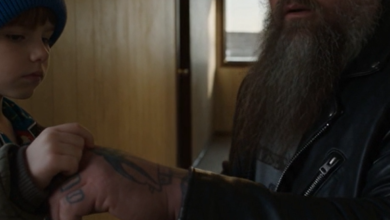
He tapped Lily’s wrist twice, paused, then tapped once.
Their private signal had begun when she was little and afraid of thunder.
Before dinner, he had asked Jack to help him free the binder’s bent middle ring. Jack had used needle-nose pliers while Daniel held the pages flat.
The carbon sheet tore across one corner.
Daniel taped it instead of replacing it.
Lily drew a small porch light on the envelope beside his elbow.
“That’s your house,” she told Jack.
“Looks better than mine.”
“It’s supposed to.”
That was how Jack remembered the last ordinary summer afternoon: burnt meat, a crooked drawing, and nobody checking who could hear them.
Now Lily sat beneath fluorescent lights, tracing a split in the funeral office’s vinyl chair.
“She said it was a school,” she told Miriam over the phone. “A place where kids go when they can’t handle things.”
“Did anyone there speak to you?” Miriam asked.
“A lady on a tablet. Mom told me to say I couldn’t sleep.”
“Could you sleep?”
“Not much. Dad was sick.”
Jack looked toward the hallway.
Caroline stood with her back to them, speaking rapidly to Ruth.
Miriam asked permission to speak with Caroline, then told Jack she would meet them at her office after lunch. Lily could bring the form. No one needed to decide anything in a funeral home.
When the call ended, Jack opened Daniel’s letter.
The first line was about the porch light.
You always leave it on when you know somebody’s coming late.
Jack pressed his thumb against the words.
Daniel had written that Caroline wanted Lily enrolled away from home. He had initially agreed to discuss it, believing she meant a short summer program. Then he found forms describing behavior he had never witnessed.
Running away.
Threats.
Violence toward a caregiver.
Jack looked at Lily, who was worrying a loose thread into a tiny ball.
Daniel’s letter did not say his wife was incapable of loving her.
It said he no longer trusted her to tell the truth when money was involved.
There was a separate trust, the letter explained, intended for Lily’s care and education. Daniel had chosen an independent trustee. He wanted Jack considered as her guardian because Jack had never needed a reason to show up.
At the bottom, Daniel had added a line in smaller handwriting.
Before you decide what Caroline has done, ask Ruth what I did.
Jack read it twice.
What had his friend left out of their last conversation?
Grant Mercer was waiting beside Jack’s motorcycle when he came outside.
Jack stopped several feet away.
At the graveside, Grant had looked like a replacement already standing in Daniel’s place. Caroline had leaned against him. His hand had rested between her shoulders.
Now he held a paper cup of water and looked exhausted.
“I’m not sleeping with her,” Grant said.
Jack said nothing.
“That seems worth getting out of the way.”
“Then who are you?”
“A CPA. Daniel asked me to review some accounts.”
Grant explained that he had met Caroline in person that morning. She had recognized his name, asked whether he had brought documents, then begun crying during the burial.
“I put a hand on her back. That’s the whole story.”
Jack wanted to dislike the answer. It was easier than admitting how quickly he had built another one.
Grant opened his coat and handed over a business card.
“Call the number from my firm’s website if you want to verify me.”
“Why come to the funeral?”
“Daniel asked me to make myself available to his lawyer after he died. Caroline told me the family would be gathering here.”
He glanced toward the office window.
“I think she wanted to find out what I knew.”
They drove separately to Miriam’s office. Jack left his motorcycle at his garage and borrowed the shop pickup; Lily rode with Caroline and Ruth.
He hated watching their car leave first.
Miriam had told him there would be no sudden rescue, no envelope that turned a frightened child into his passenger. For now, he could arrive where he had promised to be.
At the office, Lily chose the chair nearest the door.
Caroline offered an explanation for the school paperwork. A counselor had suggested structure. Lily had been frightened by Daniel’s illness. Caroline had misunderstood some questions.
Miriam listened without helping her finish.
“Why does the form describe physical aggression?”
“She threw something.”
“A pillow,” Lily said.
Caroline’s mouth tightened.
“At me.”
“After you took Dad’s phone.”
Ruth reached for Lily’s hand.
“Everybody was upset.”
Grant placed a folder on the conference table.
“Daniel asked me to reconcile transfers from an account holding Lily’s funds. Several were categorized as education expenses.”
Caroline sat back.
“Ruth handled the bookkeeping.”
It was a small sentence.
Ruth’s hand stopped halfway across the table.
Grant turned one page around.
The account listed Ruth as an authorized signer on an older family arrangement, before the new trust had been established.
Jack looked from the page to Daniel’s sister.
Ruth had bought Lily’s winter boots. She had labeled freezer meals during Daniel’s treatment. She had called Jack personally to say the family wanted a quiet funeral.
“You told me Daniel didn’t want me there,” Jack said.
Ruth smoothed the edge of her cardigan.
“He didn’t need a spectacle.”
“He was dead, Ruth.”
Caroline began crying again.
This time Grant did not move toward her.
Miriam closed the folder before Lily could read the next page.
“I need to speak with each of you separately.”
As Ruth rose, a brass desk key slipped from her purse and struck the table.
Jack recognized the bent tip.
Why did Ruth have the key Daniel had always kept inside his binder?
Ruth said Daniel had given her the key months earlier.
“For household things.”
Jack remembered Daniel searching for it three weeks before his death. They had checked beneath the desk and emptied a jar of loose screws.
He told Miriam.
She wrote something down.
No one called Ruth a thief.
Not yet.
Over the next week, the story moved through telephone calls, document requests, and appointments that began late because somebody was waiting for someone else’s records.
Lily went home with Caroline.
Miriam helped arrange for a child welfare assessment after reviewing the placement papers and Daniel’s concerns. Jack received updates only when someone was permitted to give them.
He kept his phone charged.
He stopped turning on the radio in the shop.
Grant worked from the records Daniel had already supplied and material later obtained through proper requests. What first looked like one unexplained withdrawal became a series.
Tuition advances.
Transportation deposits.
Educational consulting.
The descriptions sounded responsible.
The dates did not.
Several payments preceded any application to a school. Others went to a small consulting company whose invoices carried no student name.
Caroline owned that company.
Jack read the summary in Miriam’s office with both feet planted on the floor.
“How much?”
“Just under a hundred and forty thousand in disputed payments,” Grant said. “Disputed is the word for now.”
Jack looked away.
His entire garage, including the building, had cost less.
There was also an email exchange with the residential program. Caroline had asked whether an administrator could certify that Lily required long-term placement. Such documentation, she wrote, might help obtain distributions from the trust.
The administrator had declined.
A later attachment used similar language anyway.
The program had not created it.
Lily’s departure was postponed while the adults established what had actually been arranged. The evaluator who met with her found a grieving child, frightened of losing her home, rather than the child described on the form.
That did not make everything simple.
Caroline had been Lily’s daily caregiver for years. Lily still asked whether she had eaten. She still turned toward the door when she heard her voice.
Jack learned to hold those facts without arguing with them.
Then Miriam received the supposed later will.
It gave Caroline control over substantially more property and named Ruth to a role in administering the estate. Jack’s nomination was gone.
The signature resembled Daniel’s.
The date fell during his final hospital admission.
One witness was a woman Daniel had once employed. The other signature was difficult to read.
Miriam began contacting both.
That evening, Jack found a message waiting on his shop’s public page.
A photograph showed him crouched beside Lily at the cemetery gate.
The caption accused him of manipulating a bereaved child for her inheritance.
By morning, a customer had canceled a transmission job.
By noon, somebody had called Lily’s school to warn them about him.
Then Caroline filed a complaint saying he had offered Lily money to leave home.
Who had supplied the exact amount allegedly offered?
The amount in Caroline’s complaint was eighteen thousand dollars.
Jack stared at it.
He knew that number.
Fourteen years earlier, after his wife died, he had stopped opening the garage regularly. Bills accumulated beneath a fruit bowl. He slept in a chair because their bedroom smelled like her hand lotion.
Daniel had lent him eighteen thousand dollars.
It saved the shop.
Jack had paid him back over six years, handing him envelopes on the first Friday of every month.
He had never discussed the loan with Caroline.
Miriam asked for receipts.
Jack brought a shoebox.
Inside were oil-stained invoices, old tax papers, and Daniel’s handwritten acknowledgments of every payment. Miriam spread them across her desk.
“This matters,” she said.
“How?”
“I don’t know yet.”
While the complaint was reviewed, Jack agreed to communicate through counsel and follow the temporary boundaries set around Lily’s contact. He could not fix an accusation by giving someone another photograph.
At school, Lily’s chair remained empty for two days.
Caroline told the attendance office she had a stomach bug.
Jack learned that only afterward.
On the second afternoon, a school counselor reached Lily through an approved check-in. Lily asked whether Uncle Jack had gone to jail.
Caroline had told her the police were deciding.
The counselor documented the conversation.
The evaluator requested another meeting.
Jack spent that evening replacing a water pump with the same bolt in his hand for nearly ten minutes.
His employee, Luis, finally took it.
“Go eat.”
“I’m working.”
“You’re holding it.”
Jack sat in the pickup outside a grocery store and called Miriam. He asked whether stepping away would help Lily.
“If I drop the guardianship thing, does that calm this down?”
“Do you want me to withdraw your request?”
He watched a father lift a sleeping child from a shopping cart.
“No.”
“Then let us answer the complaint.”
The next morning, one of the supposed witnesses to the later will returned Miriam’s call. She remembered visiting Daniel at the hospital. She remembered bringing a casserole for Caroline.
She did not remember witnessing a will.
She asked to see the signature.
Then she asked who had put her name there.
That was the first clear break.
The second came from the hospital’s visitor records, which placed the other named witness elsewhere during the period described.
None of it erased Jack’s fear.
People still lowered their voices when he entered the diner. A neighbor asked whether Lily had “always been troubled.” Someone offered to help him by posting Caroline’s address online.
He told them to stop.
Late Friday, Ruth came to the garage.
No cardigan.
No covered dish.
She stood beside the office door with a grocery bag pressed against her coat.
“I didn’t write that complaint,” she said.
Jack did not invite her in.
“But you gave her the number.”
Ruth looked down.
Then she took a damaged blue sheet from the bag.
Why had she kept the thing Caroline believed was destroyed?
Ruth sat on the visitor’s chair without removing her coat.
The blue carbon sheet lay between them, its torn corner repaired with cloudy tape.
Jack did not touch it.
“We call Miriam first.”
“I know.”
While they waited for the call to connect, Ruth looked at the framed photograph behind his desk. Daniel stood beside Jack at the garage reopening, grinning beneath a crooked paper banner.
“That money wasn’t his to lend.”
Jack felt the room tilt slightly.
“The eighteen thousand?”
Ruth nodded.
After their mother died, Daniel had managed some estate matters while Ruth recovered from surgery. Eighteen thousand dollars intended for her had gone into Jack’s business.
Daniel had called it temporary.
He had not told her until years later.
Jack remembered every repayment envelope.
“He got it back.”
“I know.”
“Then he paid you.”
“Eventually.”
The word sat between them.
Daniel had repaid the principal, but the delay had cost Ruth a deposit on a small house. She had stayed in a rental, then watched prices rise beyond what she could manage.
Her brother had apologized.
He had also asked her not to tell Jack.
“He said you were only just standing again.”
Jack looked at the photograph.
Daniel’s hand rested on his shoulder.
For fourteen years, he had mistaken the whole weight of that gesture.
Miriam joined by speakerphone. Ruth repeated what she had said, then explained the transfers.
Caroline had first approached her with an offer to “put things right.” Ruth knew the accounts. Caroline knew how to make the payments look ordinary.
Ruth had believed she was recovering what Daniel owed her.
“Was it eighteen thousand?” Miriam asked.
“No.”
“How much did you receive?”
Ruth pressed her palms together.
“Forty-two.”
The rest, she said, went toward Caroline’s debts and expenses through the consulting company. Once Ruth had signed the first false description, Caroline reminded her of it whenever she hesitated.
But Ruth had not merely been frightened.
She had been angry.
She admitted that plainly.
Jack stood and walked to the sink. He ran water over hands that were already clean.
“Lily’s money,” he said.
“I told myself Daniel would replace it.”
“He was dying.”
“I know.”
The later will had been Caroline’s answer to the new trust and Jack’s nomination. Ruth had helped locate an old signature sample. She had also removed material from Daniel’s desk.
Among it was the carbon sheet beneath a handwritten instruction he had prepared while completing the earlier estate work.
It recorded his concern about false educational expenses.
Ruth had been told to burn it.
She burned unrelated paper in Caroline’s fireplace and kept the blue sheet as protection against being blamed alone.
There was no brave explanation.
She wanted insurance.
Miriam told her to bring everything to the office and obtain her own attorney. Cooperation would not erase what she had done.
After the call, Jack opened the shoebox of loan receipts again.
Daniel had rescued him with someone else’s money.
Ruth had answered that wrong by helping take money from a child.
He could love his friend and still name what he had done.
But when Lily asked about her father, how much truth could he bear to give her?
Lily did not attend the financial hearing.
Jack was grateful for that.
Her situation was being considered separately, with an advocate appointed for her and adults speaking to her away from the people whose interests were in dispute.
She had asked to wait at Miriam’s office with the assistant she knew.
Before Jack left, she handed him the envelope.
“Keep it dry this time.”
He put it inside a plain document folder.
The courtroom held no crowd of bikers. Luis sat in the second row wearing a borrowed tie. Two former customers had come after receiving requests to provide relevant records.
Ruth sat with her attorney.
Caroline wore a navy suit.
Without the funeral clothes, Jack could see how ordinary she looked. He had spent nights imagining someone visibly cruel. The woman arranging a tissue beside her notebook could have been waiting for a mortgage appointment.
Her lawyer challenged the earlier documents and questioned Daniel’s condition.
Miriam answered with dates, witnesses, and records.
The will had been executed before Daniel’s final decline. The lawyer and witnesses described the meeting. The supposed later document had problems that went far beyond an uneven signature.
One listed witness denied signing it.
The other could not have witnessed events as described.
Grant explained the disputed payments. He did not speculate about Caroline’s feelings or call the company a scheme. He showed where money went, what invoices claimed, and which institutions had never received it.
Then came Ruth.
She spoke quietly enough that the judge asked her to move closer to the microphone.
She admitted helping Caroline.
She admitted receiving money.
She admitted keeping the carbon sheet because she feared being left with all the blame.
Caroline watched her without blinking.
The blue sheet was fragile, so an enlarged image was displayed while the original remained protected.
The tape showed clearly.
So did the impression of Daniel’s handwritten warning beneath later marks from a document Caroline had prepared. The physical sheet was one part of a larger chain: the binder, Daniel’s retained records, Ruth’s account, and the corresponding financial documents.
Miriam asked Caroline about her access to the desk.
Caroline said she had never opened the binder.
She said Ruth handled those things.
She said she had never seen the blue sheet before her attorney showed her the exhibit.
Miriam let the answer settle.
Then she asked why an instruction bearing Daniel’s concerns had been removed rather than supplied with his other papers.
“I can’t answer for Ruth,” Caroline said.
Miriam turned to the enlarged image.
Caroline leaned forward.
“That isn’t how it looked.”
Her lawyer touched her sleeve.
She continued anyway.
“The corner was hanging off. You couldn’t read through the tape.”
No one spoke.
Jack remembered the hamburgers.
The pliers.
Daniel flattening that corner with his thumbnail.
Miriam looked back at Caroline.
“When did you see it in that condition?”
Caroline’s mouth opened.
Across the aisle, Ruth lowered her head.
The judge asked her to answer the question.
Caroline reached for the tissue, missed it, and said, “She told me it had burned.”
What else had the two women agreed would never reach this room?
The hearing did not end with handcuffs.
It ended with directions, deadlines, and people gathering papers while the clerk called the next matter.
Jack had expected relief to feel larger.
Instead, he sat in his truck with the engine off, unable to remember where he had put the parking ticket.
Miriam explained the next steps twice.
The disputed estate documents would be addressed through the court. The financial evidence would go to the appropriate investigators. Accounts and distributions were subject to protective orders while the remaining issues were resolved.
Lily’s future required its own decisions.
Daniel’s nomination mattered.
So did Jack’s home, his history with her, her wishes, and the findings of the people assigned to assess her needs.
There were interviews.
Background checks.
A visit to the house where Jack had lived alone for fourteen years.
The spare room contained motorcycle parts, Christmas decorations, and a bed beneath a folded moving blanket. He cleared it without buying anything pink.
When Lily visited with the evaluator, he asked what color she wanted.
“Can I decide later?”
“Sure.”
She tested the bedroom door.
“Does this lock?”
“From inside.”
She turned it once, then unlocked it.
Weeks passed before a temporary arrangement allowed her to stay. More months passed before the court approved the longer-term plan.
Caroline did not disappear from Lily’s life.
Contact followed the arrangements made for Lily’s welfare, and Lily was allowed to have feelings about it that changed from one day to the next.
Some days she missed her.
Some days she would not say her name.
Jack learned to answer, “Okay,” without adding anything.
The financial case moved more slowly. Ruth cooperated and began restitution under the eventual agreements and orders. Caroline faced consequences for the false records and diverted funds. Recovering money took longer than proving it had moved.
There was no morning when everything returned to its proper place.
Jack sold one of his motorcycles.
Lily found out and became furious.
“Dad left money.”
“For you.”
“I didn’t ask you to sell it.”
“I know.”
They ate dinner in silence, then washed dishes together. The next evening, he showed her the household budget because secrecy had already cost her enough.
He also told her the truth about the old loan.
Not every detail at once.
Enough to understand that her father had hurt Ruth, and that Ruth still had no right to hurt her.
Lily stared at Daniel’s photograph for a long time.
“He should’ve told you.”
“Yes.”
“Are you still his friend?”
Jack rubbed the edge of the table.
“Yes.”
She nodded as though that answer required some storage space.
In November, she finally chose a bedroom color.
Yellow.
Not bright yellow. The color inside a lamp shade when somebody was still awake downstairs.
They painted badly. Jack left a thumbprint beside the window, and Lily refused to let him cover it.
That night, she placed Daniel’s envelope on her desk. The papers were stored safely elsewhere, but the porch light she had drawn remained on the front.
Jack paused outside her room.
“You need anything?”
Lily touched his wrist.
Two taps.
A pause.
One more.
Then she looked past him, toward the stairs.
“Can we leave the porch light on?”