A Boy Kept Sneaking Into My Motorcycle Shop Until I Let Him Stay—Then He Handed Me the Key I Had Buried With My Son Thirteen Years Earlier
Frank’s first thought was that grief had finally made him stupid.
He had spent thirteen years hearing his son in ordinary noises: a loose exhaust outside the house, boots scraping the porch, somebody laughing two aisles over at the hardware store. Now a woman had walked into his garage with a boy and a key, and he was ready to believe anything.
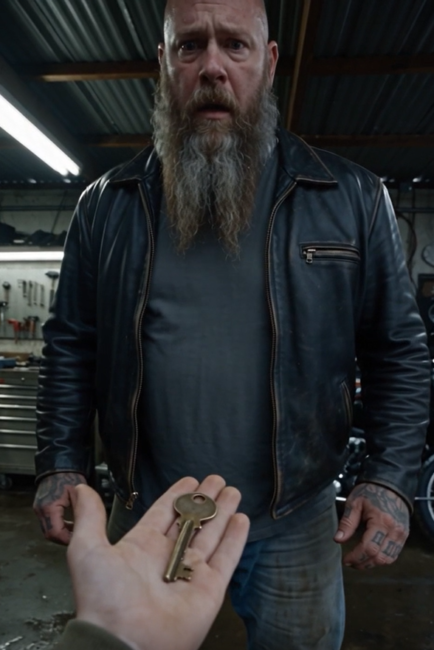
He placed the key on the counter.
“Say that again.”
Claire kept her eyes on Noah. “Not with him standing here.”
“He’s standing here because nobody tells him anything.”
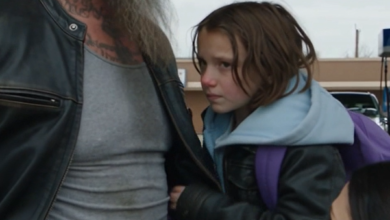
The boy’s voice was quiet. Frank looked down and saw that Noah had caught the hem of his mother’s coat between two fingers. He was angry with her, but he was also making sure she stayed.
Frank stepped away from the door.
“Office is quieter,” he said.
Claire didn’t move until he added, “Door stays open.”
His bookkeeper, Ruth Bell, emerged from behind a shelf of service manuals. She had heard enough to turn off the radio. Without asking questions, she moved three chairs into the office and set water on the desk.
Frank stayed standing.
Claire explained that she had been pregnant when Eli disappeared in March 2013. Noah was born that December. He was twelve now, with a birthday coming.
The arithmetic worked.
Frank wished it didn’t.
“Why didn’t you tell me?”
“I thought you knew.”
He laughed once, without humor.
“About him. Not about Eli.”
She took a breath. “Wade said he told you. He said you wanted proof before you’d speak to me. Then he said you didn’t want either of us coming around.”
Frank stared at her. His brother had sat at his kitchen table every Sunday after the memorial. He had brought groceries when Frank forgot to eat.
“You could’ve called.”
“I did.”
“No.”
“I called the shop. Wade answered. I sent a letter.”
Frank turned toward the filing cabinets. Wade had managed the office during those months. Frank could barely remember paying the electric bill.
Then another memory surfaced, meaner and clearer.
A young customer had once offered to buy Eli’s old fuel tank. Frank had sold it for almost nothing because he couldn’t stand looking at it.
Maybe he had sold the key too.
Maybe this was nothing.
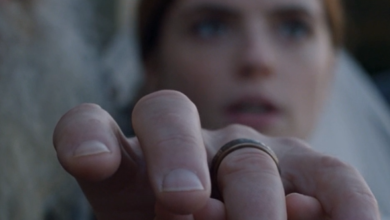
He picked it up again. The crooked E leaned into the D. The notch was where he remembered.
Noah watched his face.
“I found a picture,” the boy said. “You and my dad. Your shop sign was behind you.”
“So you knew?”
“I thought maybe.”
All those afternoons. The questions. The refusal to leave.
Frank’s knees weakened.
Claire pressed her palms together. “I found out Eli was alive four years ago. Wade said if you knew, the people looking for him would find Noah.”
Frank looked at her hands. No wedding ring. A burn mark near one wrist. She had aged in ways his memory hadn’t allowed.
“Where is he?”
“I don’t know now.”
“But Wade does?”
Her phone vibrated on the desk.
Wade’s name lit the screen, and beneath it came a message: Did the boy take the key?
Frank remembered making that notch.
It had been a Saturday in late summer, before Eli and Claire married. Eli was twenty-three, balancing a paper plate on his knee while Frank grilled hamburgers behind the shop.
Wade sat nearby doing invoices.
Eli had dropped his motorcycle key into the gravel, then complained that every key on his ring felt the same through riding gloves.
Frank took a small file from his pocket.
“There. Missing tooth. You’ll find it blind.”
Eli ran his thumb over the notch and grinned.
Later, Wade borrowed the file to open a carton. His right index finger was stiff from an old injury, so he braced the carton with his middle finger instead.
Claire teased him about the shop’s new loan paperwork.
“You make your check marks backward.”
“Left-handed accountant,” Wade said.
He had drawn a little backward tick beside each payment and folded the yellow duplicate into thirds before slipping it into his shirt pocket.
That evening Eli pressed the key into Frank’s palm.
“Hold that. I’m going to marry somebody who thinks your brother’s interesting.”
Frank had laughed until the grill smoked.
That was the whole memory.
No warning in it.
Nothing that had felt worth remembering.
Now Frank stood beside the office desk while Claire’s phone continued to buzz. He could picture Wade’s folded invoices more clearly than he could picture the last time he had hugged his son.
Ruth touched his elbow.
“Sit before you fall.”
He sat.
Claire didn’t answer the call. Instead, she opened a folder on her phone and showed them photographs of envelopes. Four years earlier, she said, Eli had written to her from Indiana under another name.
She had kept the originals.
“Why photographs?” Ruth asked.
“Because I was afraid somebody would take them.”
Frank heard the accusation in that sentence and hated that he couldn’t tell where it belonged.
Claire’s first letter to him had never reached his hands. But four years ago, she could have driven here. She could have stood in this very doorway.
“You let me keep going to that grave.”
Her face tightened.
“Yes.”
She didn’t offer an excuse fast enough to soften it.
Noah looked between them. “Is there somebody in it?”
Frank shook his head.
“Just a box. Some things of his.”
“And a key?”
“Wade said he put it in.”
The boy touched the brass on the desk.
Frank had been too broken to look inside the little memorial box before it was closed. His brother had handled that too.
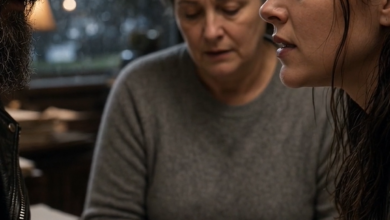
Ruth pulled a legal pad toward her.
“We’re writing down what each person actually saw,” she said. “Everything else goes in a different column.”
It was the first useful sentence anyone had spoken.
Frank described the motorcycle recovered from the creek. The police search. Wade telling him Eli couldn’t have survived. The memorial held when there was still no body.
Claire described being told Frank blamed her for Eli’s debts.
Neither of them had heard those words directly from the other.
Ruth drew a line down the page.
Then she asked Claire a question Frank hadn’t thought to ask.
“If Wade’s been keeping you apart, why did you move back close enough for Noah to find this shop?”
Claire opened her purse and took out a yellow envelope already folded into thirds.
The envelope held a letter from Wade.
Frank recognized the neat block handwriting before he read the return address. His brother wrote grocery lists as if somebody might audit the refrigerator.
Claire had moved back six weeks earlier because Wade said it was finally safe. Eli’s old debts were settled. There was a job opening at a packaging plant, an affordable duplex, a school with a decent bus route.
“He helped with the deposit,” she said.
Ruth read the letter twice.
There was nothing openly threatening in it. Wade sounded practical and generous. He mentioned Noah’s age, offered help buying school clothes, and told Claire not to worry about old misunderstandings.
At the bottom, one sentence had been underlined.
Let me speak to Frank first.
“He kept putting it off,” Claire said. “His blood pressure. A bad anniversary. Something at the shop.”
Frank remembered those weeks. Wade had indeed asked whether he was sleeping. Had suggested selling the business. Had brought brochures for a small retirement community.
None of it had seemed connected.
Ruth asked permission to copy the letter.
Claire nodded.
Then Frank asked about the key.
“Eli left it with me before the crash. Said he wanted a spare somewhere safe.”
“Wade told me it was recovered.”
“I didn’t know that.”
For the first time, Frank saw how easily the lie could have worked. His brother had known about the notch. He could have put any brass key into that box and described the right one afterward.
Noah shifted in his chair.
“Mom didn’t tell me to come here.”
Claire looked at him.
“I found the photo when we unpacked,” he continued. “Then I saw the sign from the bus. I just wanted to see.”
Frank remembered the first afternoon. Noah had stood too close to a motorcycle on a lift, and Frank had barked at him to get outside.
The second time, he’d told him this wasn’t a daycare.
The third, he’d found the boy sweeping broken zip ties into a dustpan.
“You should’ve told me,” Frank said.
“You kept telling me to leave.”
There was no answer to that.
Claire took a tissue from Ruth but didn’t use it.
“I was trying to get us settled first. Then I was going to ask him again.”
“Wade?”
“Yes.”
Frank leaned back. For thirteen years, his brother had been the person between him and every difficult thing. Forms, creditors, condolences. Frank had mistaken that arrangement for kindness because he had needed it to be kindness.
Ruth asked where the original letters from Eli were kept.
“At home.”
“Then don’t go alone,” Frank said.
Claire stiffened.
He stopped himself.
“I’m asking. Ruth can come. I’ll stay here.”
It mattered that she had a choice. He could see that now.
She agreed.
As she and Noah stood, the boy hesitated beside Frank’s chair.
“Am I allowed back tomorrow?”
Frank looked at the safety glasses hanging from the boy’s shirt.
“Yeah.”
“For real?”
“For real.”
Claire’s phone rang again. This time she answered on speaker.
Wade skipped hello.
“Tell me Frank hasn’t opened the old loan file.”
Ruth’s expression changed before anyone spoke.
She had worked for Frank for nine years. She knew the shop’s current accounts, the unpaid invoices, the drawer where he hid receipts until she became sufficiently irritated to find them.
She also knew which old records Wade had told her to discard.
“The file’s still here,” she said.
Wade went silent.
Then he gave a small laugh. “Ruth? I didn’t realize we had an audience.”
“What loan file?” Frank asked.
“Old business. Nothing that concerns Claire.”
Claire ended the call.
The office seemed suddenly too small for everyone inside it.
Ruth went to the storage loft while Claire called a neighbor to collect Noah. Frank wanted the boy to stay where he could see him. He also understood that wanting something didn’t give him the right to decide.
Noah left with the key in his pocket.
Frank watched until the neighbor’s car disappeared.
The file came down in a cardboard archive box. Across its lid Wade had written CLOSED.
Inside were loan statements, supplier invoices, and copies of documents Eli had supposedly signed before his disappearance. Frank remembered being told his son owed eighty-four thousand dollars.
He had paid what he could. Later, he’d signed a private repayment agreement with Wade, who said he had covered the rest to protect the shop.
Ruth spread the pages across the counter.
“These supplier charges,” she said. “We need to verify them.”
One invoice listed equipment Frank had never owned.
Another charged for an engine delivered after Eli disappeared.
A third bore Eli’s signature, but the loop on the final letter looked copied slowly, with a little pause that had darkened the paper.
Frank reached for the phone.
Ruth covered it with her hand.
“Not him. The suppliers.”
By late afternoon they had three answers.
One invoice number belonged to a different customer. One company had no record of the sale. The third had closed before the date printed on the bill.
Copies weren’t enough to explain everything, but they were enough to stop pretending this was a misunderstanding.
Then Ruth found a newer agreement.
Four years earlier, Frank had signed an amendment giving Wade an increased ownership interest in the shop in exchange for forgiving the remaining family debt.
Frank remembered that winter. His wife, Anne, had died. Wade had brought the document with a casserole and said it would make things simpler.
Ruth read the amount aloud.
Frank sat down on a tire.
“He charged me twice.”
“Maybe more,” she said.
Near the bottom of the agreement was a list of supporting invoices. Beside each number sat a backward check mark.
Frank stared at them until Ruth asked whether he was all right.
He told her about the yellow duplicates. The folded pages. Wade’s hand.
She photographed everything and called a lawyer she knew through her church.
Claire returned carrying a grocery bag full of letters. At the bottom was a recent envelope from Eli, forwarded through Wade.
Inside, beneath a request for money, her former husband had written a single sentence.
Ask my father what he paid to keep me gone.
Frank didn’t sleep.
By morning, his brother had made the first move.
A notice appeared on the shop’s side door announcing a temporary closure for a dispute between owners. Wade had changed the office lock and emailed customers that Frank was experiencing a “personal crisis.”
The quotation marks around those words were Ruth’s when she read the email aloud.
By nine, two customers had canceled.
By ten, a photograph of Frank standing over Noah beside the workbench was circulating in a neighborhood group. Someone had cropped out Claire.
The caption asked why an unstable man was being allowed unsupervised access to a child.
Frank recognized the angle.
The photograph had come from the shop’s security camera.
Wade still had remote access.
A friend from Frank’s riding group called, uncomfortable and cautious.
“Brother, I know there’s another side.”
“Then ask me.”
“I’m asking.”
Frank almost hung up. Instead, he explained what he could without giving Noah’s name. His friend listened, then offered to come over.
“Bring coffee,” Frank said.
It was the only help he could bear to request.
Claire arrived after dropping Noah at school. She had already received a message from Wade reminding her that the duplex deposit had been a loan.
Another message threatened to tell people she had knowingly concealed a living father from his child.
“He’s not wrong about that,” she said.
“We’ll get to it.”
“He’s counting on you hating me first.”
Frank looked at her across the locked office door. He had spent most of the night doing exactly that.
Their lawyer, Denise Park, arrived before lunch. She asked them to stop responding to Wade, preserve the messages, and make a chronology. She would handle the business dispute. She also wanted the questionable documents reviewed by the proper authorities.
Frank wanted something louder.
Denise looked at his clenched hands.
“Give me something I can use.”
He opened them.
That afternoon, Wade came to the shop wearing a clean navy jacket. He looked like the reasonable brother in a family that had needed one.
He spoke softly in front of Frank’s friend.
“You need rest. This woman has brought a child here and told you what you’ve wanted to hear for thirteen years.”
Frank felt the old doubt return.
Wade saw it.
“Eli made bad choices,” he continued. “You know that.”
“Is he alive?”
His brother adjusted one cuff.
“I don’t know what Claire’s told you.”
“That wasn’t the question.”
Wade left a purchase offer on the workbench. Frank could sign over his remaining share, retire, and end the embarrassment.
When he was gone, Claire’s phone rang.
An unfamiliar number.
She stared at it long enough for Denise to ask whether she wanted to answer.
Claire nodded and put it on speaker.
A man said her name.
Frank gripped the edge of the bench.
Older. Rougher. Unmistakable.
“Eli?”
There was a breath on the line.
Then his son said, “Dad, don’t trust Claire. She knew I was alive.”
Claire sat down before anyone asked her to.
“Yes,” she said into the phone. “Tell him how I found out.”
Eli didn’t answer.
Frank could hear traffic behind his son’s breathing. Somewhere, a truck reversed with three flat beeps.
“Where are you?” Frank asked.
“At work.”
“Where?”
“Fort Wayne.”
Denise introduced herself and asked whether he would speak with her. Eli agreed too quickly, then asked if Wade was there.
That question changed the room.
“No,” Frank said.
Eli exhaled.
The story came out in pieces, interrupted by long silences and one request to call back after his shift.
The crash had happened. Eli had lost control on a wet road and gone down an embankment. He had climbed out before the motorcycle washed into deeper water.
He was frightened, bruised, and already desperate about debts.
He called Wade.
His uncle collected him before the police found the bike.
“He said the people I owed would hurt Claire,” Eli said. “Said he could get me away until things settled.”
Frank closed his eyes.
“How long was it supposed to be?”
“A few weeks.”
Thirteen years sat between them.
Wade had given him cash, found work through an acquaintance, and warned him that returning would expose debts and signatures Eli barely understood. Later, he said Frank had agreed it was best for everyone.
“Did you ever ask me?”
“No.”
The answer was so small Frank nearly missed it.
Denise asked about the money. Eli admitted he had signed papers he hadn’t read and borrowed for a repair business that failed before it opened. He had trusted Wade to manage the accounts.
That did not make him innocent.
Frank heard his son struggling to make it sound that way.
“Stop,” he said.
The line went quiet.
“You let your mother die thinking you were dead.”
Eli made a sound Frank had never heard from him.
Nobody filled the silence.
Afterward, Claire told her part.
Four years earlier, Eli had contacted her for money. She had confronted Wade. He showed her documents suggesting Eli could face serious charges, then warned that Frank would blame her for keeping Noah hidden.
She had been frightened. She had also been furious with Eli and unwilling to let him disrupt their son’s life.
So she sent money once.
Then she kept quiet.
“I told myself I was protecting Noah,” she said. “Some of it was that. Some of it was that I didn’t want him choosing a man who could leave us.”
Frank looked at her.
“Did he know about the baby?”
Claire shook her head.
On the phone, Eli said, “Not until she sent a picture.”
Four years ago.
Frank pressed his thumb against the scar on his knuckle.
His son had known he was a father for four years and still hadn’t come home.
That evening Noah asked whether his father was a good person.
Frank pulled out a chair beside him.
“He’s done things he’ll have to answer for.”
“Can I be mad?”
“Yes.”
“At Mom too?”
Claire nodded from the doorway.
Noah studied them, then asked the question none of the adults had answered.
“If Uncle Wade lied to everybody, why does he still get to tell people what happened?”
Wade had already arranged a meeting.
He called it a discussion with the shop’s stakeholders: several longtime customers, a lender, Frank’s lawyer, and two people who had helped organize Eli’s memorial. He booked the back room of a neighborhood community center.
His invitation described a plan to protect the business during a difficult family situation.
Denise advised Frank to attend.
“Let him explain his proposal,” she said. “We’ll ask questions.”
Eli arrived the morning of the meeting.
Frank saw him through the garage window and knew him before he reached the door. His son had a heavier face, thinning hair, and work boots worn crooked at the heels.
For a moment Frank wanted to cross the room.
Instead, he stayed beside the bench.
Eli stopped several feet away.
“I don’t know what to say.”
“Then don’t start with a speech.”
His son nodded.
There was no embrace.
Denise spoke with him privately, collected the documents he had brought, and arranged for him to give a formal statement. Frank learned later that investigators had already begun contacting the suppliers.
That evening, Claire stayed home with Noah. Frank would not have the boy sitting through another roomful of adults deciding what his family meant.
Wade stood when Frank entered the community-center room.
He stopped standing when Eli followed him.
A chair leg scraped.
Someone near the coffee urn whispered Eli’s name.
Wade recovered quickly.
“Well,” he said. “That explains the confusion.”
Frank took a seat.
Denise placed copies of the disputed invoices on the table. She asked Wade to explain the charges, the repayment agreement, and the ownership amendment.
He called them old administrative mistakes.
Then he said Eli had supplied the figures.
Eli shook his head.
Wade spread his hands. “You were in trouble. You don’t remember every piece of paper you gave me.”
Denise showed him the supplier responses.
He glanced at them, then pushed them back.
“Those copies could have been altered.”
Frank watched his brother’s right hand. The stiff index finger hovered above the table while his middle finger moved the pages.
“The original invoices,” Frank said. “Where are they?”
“Gone, probably.”
“You told Ruth to throw them out.”
“Because the debt was settled.”
Denise laid out a yellow duplicate recovered from the archive box.
Wade reached for it.
His thumb covered the backward check mark.
“This one shouldn’t be in here,” he said.
The room became still.
Denise didn’t move the page.
“Why?”
Wade looked toward Eli.
“It was from the other set.”
“What other set?” asked the lender.
Wade withdrew his hand.
Frank could hear the vending machine humming in the hallway.
For years, his brother had survived by being the person who explained the paperwork. Now everyone was waiting for him to explain one sentence.
Eli reached into his folder.
“You told me Dad signed this.”
He placed a copy of a letter beside the invoice.
Frank had never seen it.
It purported to tell Eli to stay away and let his family move on.
At the bottom was Frank’s name.
Wade stared at the signature.
Then he said, “You were never supposed to keep that.”
Nobody applauded.
The lender gathered his copies. One of the women from the memorial cried quietly into a folded napkin. Wade asked for a private conversation with Frank.
Frank said no.
The meeting ended with chairs being stacked around people who no longer knew where to look. Denise collected the papers. Eli waited beside the exit without assuming his father would leave with him.
Frank paused there.
“Tomorrow,” he said. “At the shop.”
Eli nodded.
What followed took months.
The business dispute moved through lawyers and records requests. Investigators compared signatures, traced payments, and interviewed the people Wade had named. Frank learned to tolerate answers that began with “not yet.”
Eventually, Wade admitted to creating false invoices and using them to obtain money and a greater share of the shop. The agreement that had enlarged his ownership was challenged, and a settlement returned control to Frank while the criminal case continued.
There was no single check that repaired thirteen years.
Some money had vanished into Wade’s own debts. Some could be recovered only slowly. Frank stopped measuring the outcome by whether he would get every dollar back.
He wanted the lies written down correctly.
Eli gave statements. He also admitted his own choices without attaching Wade’s name to every sentence. He had been frightened at twenty-six. Later, he had been ashamed. Later still, he had become accustomed to a life in which nobody knew what he had abandoned.
Frank found that last admission hardest.
They began with breakfast once a week.
Sometimes they ate without saying much. Once, Frank left halfway through because Eli referred to the missing years as “everything that happened.”
“You happened too,” Frank told him.
The next week Eli came anyway.
Claire agreed to counseling with Noah and stopped answering questions with “when you’re older.” She didn’t tell him every adult detail, but she told him when she didn’t know how to explain something.
He trusted that more.
Frank apologized for the afternoons he had chased Noah from the shop.
“There were things in here that could hurt you,” he said. “But I could’ve said it better.”
“You were pretty loud.”
“Yeah.”
Noah considered the apology.
“Can I have my own stool?”
Frank bought one that Saturday.
He kept it away from the lifts and put a pair of safety glasses on top. Schoolwork came first. Tools were used only with permission. Noah complained about both rules with enough energy to reassure everyone.
One evening, he brought the old brass key back.
Frank had offered to return it to Eli.
His son declined.
“I’ve kept enough things that weren’t mine to keep.”
Noah rolled it between his fingers.
“What does it open now?”
Frank showed him the old motorcycle under a cover at the back of the shop. Eli had owned two. The one recovered from the creek was gone, but the first one had remained untouched through every season of grief.
Its ignition still accepted the key.
They didn’t start it.
Noah just turned it far enough for one small light to wake on the dash.
Then he looked at the locked side door of the shop.
“Could it open that too?”
The locksmith said he could make a separate key and fit it to the old brass ring.
Noah said that wasn’t what he meant.
Frank listened while the boy explained, patiently and in unnecessary mechanical detail, that he wanted the old key itself to have a useful job.
They compromised.
The motorcycle key stayed intact. Beside it went a new key for the shop’s side door, cut with a plain brass head. Frank filed a small notch into its edge while Noah watched.
“Missing tooth,” the boy said.
Frank set down the file.
For a moment the shop held two Saturdays at once: Eli laughing over a paper plate, and Noah leaning against the bench with homework still unfinished in his backpack.
Then the compressor switched on.
The old memory loosened its grip.
Noah’s birthday came in December. Claire brought a grocery-store cake. Ruth supplied paper plates, then announced she would not be cleaning frosting out of the keyboard.
Eli arrived with a small tool roll.
He gave it to Claire first.
“Is this okay?”
She looked inside, then passed it to Noah.
Frank noticed the question. He noticed that his son waited for the answer.
Noah thanked him without calling him Dad.
Eli accepted that.
They ate beside the workbench. Frank’s riding friends stopped by in pairs rather than arriving as a parade. Nobody made a speech. One man brought a card addressed to “the assistant manager,” which Noah immediately showed everyone.
Later, while Claire washed the cake knife in the office sink, Eli asked Frank whether he could help put the covered motorcycle back into running condition.
Frank wiped a ring of frosting from the counter.
“Maybe.”
His son nodded.
A year earlier, Frank would have thought maybe was a cruel answer.
Now it was the most honest one he had.
Noah kept coming after school. Some days he wanted to learn. Other days he wanted a snack and somewhere to sit while his mother finished her shift.
Frank learned the difference.
He stopped turning every afternoon into a lesson.
Once, Noah fell asleep over a worksheet in the office. Frank took off his leather vest and draped it over the back of the boy’s chair so the cold draft from the window wouldn’t reach him.
When he turned, Eli was standing in the doorway.
Neither man spoke.
Frank nodded toward the coffeepot.
Eli poured two cups.
Outside, rain tapped against the metal awning. The side door needed a new weather strip. Frank made a note, then crossed it out and wrote Noah’s name beside the job.
Something they could do together.
In March, Frank stopped visiting the empty grave.
He and Eli arranged to have the marker removed. Frank kept the little memorial box unopened until Noah asked whether he wanted company.
Inside was a cheap brass key without a notch.
Frank held it for a long time.
Then he placed it in the scrap-metal bin.
That afternoon, Noah arrived before Claire had finished parking. He hurried to the side door, fumbled with the two keys, and looked back through the rain.
“Still okay if I come in?”
Frank stood inside with a towel.
“You have a key.”
The boy grinned and turned it.
Behind him, Claire switched off her engine. Across the shop, Eli set three clean mugs beside the coffeepot.
Frank held the door.
Who would need it first tomorrow?