She Was Born With Her Heart Outside Her Chest—Years Later, Surgeons Gave It the Protection It Needed
Her heart was beating outside her chest when she entered the world. Less than an hour later, a team that had spent weeks planning for her arrival began the delicate work of giving her a chance to survive.
Vanellope Hope Wilkins was born at Glenfield Hospital in Leicester on November 22, 2017. Her parents, Naomi Findlay and Dean Wilkins, from Bulwell in Nottingham, already knew that their daughter would need extraordinary care. A prenatal scan had revealed a condition called ectopia cordis, in which the heart develops partially or completely outside the chest.
The news made her delivery a carefully coordinated medical event. Around 50 clinical staff, working across several specialist teams, were involved in bringing Vanellope safely into the world and managing her first hours.
Yet the story did not end with the urgent operations that followed her birth. Years later, the same child would return for another procedure, this time to build the solid protection her heart still needed. And a hospital update in April 2026 would show how far she had come.
A birth planned around a vulnerable heart
For Vanellope’s doctors, preparation began before she was born. Specialists studied her condition and planned a Caesarean delivery to reduce the risk of injury to her exposed heart. The first challenge was to deliver her safely; the next was to protect the organ and stabilize her breathing and circulation.
The University of Leicester’s contemporary account recorded that she cried at birth and that her heart continued to beat effectively during those early steps. At approximately 50 minutes old, the team considered her stable enough for the next stage of surgery.
Moving the heart inward required particular care. The blood vessels connected to it could be affected by a change in position, so the work could not be treated as simply placing an organ back where it belonged. Her doctors had to protect circulation throughout the process.
Contemporary reporting described three early operations. Those procedures were essential to her survival, but they did not provide an ordinary, rigid chest wall. Saving her life and giving her heart lasting physical protection were related challenges that would unfold over different timescales.
The long road beyond the first operations
Vanellope went on to receive prolonged specialist care, including at Queen’s Medical Centre in Nottingham. When her discharge home was announced in February 2019, the hospital described the many people involved in preparing for that next step.
Her care extended beyond surgery. Orthotics specialists had created a protective chest shield, while nurses, physiotherapists, play specialists and other staff helped support her development and her family’s preparations for home.
Going home was a major milestone. It also came with ongoing medical needs. The discharge announcement described substantial breathing support and close monitoring at that stage, showing how much care continued after the first dramatic headlines had faded.
A survival story can be compressed into a photograph and a few sentences. Vanellope’s experience was measured in years of appointments, practical adaptations, specialist decisions and family life around an unusually vulnerable heart.
As she grew, her teams continued considering how to create a stronger protective structure around it. The question was no longer only how to get her through infancy. It was how to improve the life she was continuing to build.
A different kind of operation in 2025
On April 16, 2025, seven-year-old Vanellope underwent an eight-hour chest reconstruction at the East Midlands Congenital Heart Centre at Leicester Royal Infirmary.
University Hospitals of Leicester described the operation as the first of its kind in the UK for a patient with her condition. Around 20 specialists contributed to the procedure, drawing together expertise in children’s heart surgery, paediatric surgery, anaesthesia and intensive surgical support.
The team used ECMO support during the operation. They carefully separated the heart from the thin tissue covering it and reshaped the ribs so that they could form a protective structure at the front of her chest.
This was not a heart transplant. The aim was to reconstruct the chest wall around her own heart and give it protection that her earlier care had not been able to provide.
One of the surgeons, Ikenna Omeje, had also been involved when Vanellope was born. Her return to theatre connected the urgent work of 2017 with a procedure planned over much of her childhood.
Her mother later described the uncertainty before surgery and the relief of learning that it had gone well. The operation represented years of waiting for an appropriate opportunity, supported by teams who understood the unusual details of her case.
The update that brought the story beyond survival
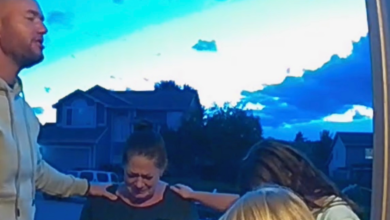
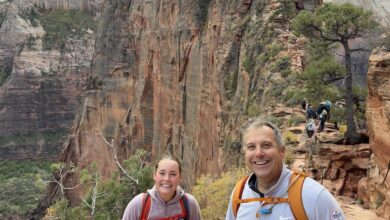
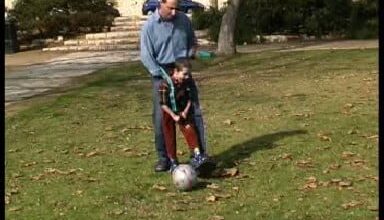
On April 22, 2026, the hospital published a one-year follow-up. Vanellope’s family and clinical team were celebrating the outcome of the reconstruction. Her mother described a daily life with less fear about an accidental injury to her daughter’s heart.
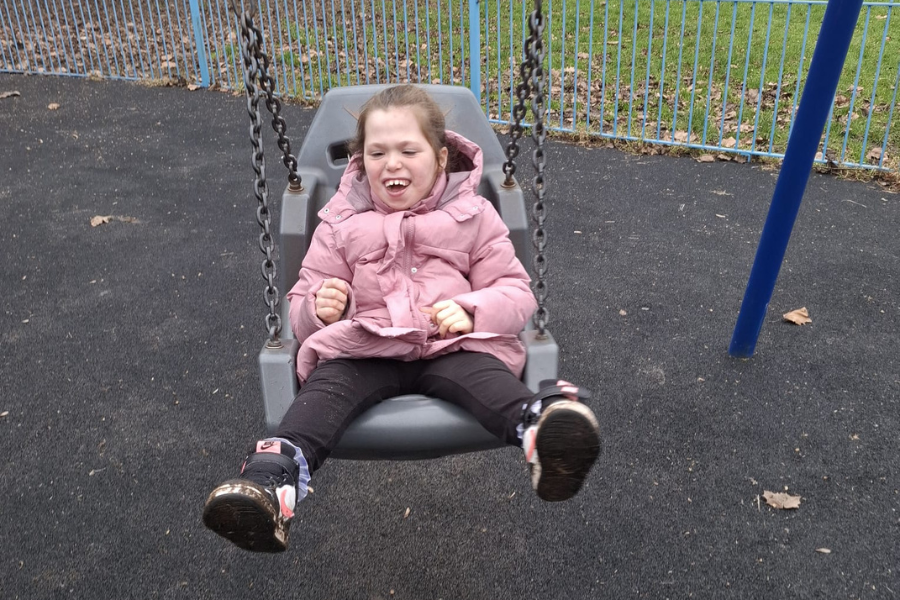
The update included activities such as swimming and trampolining. It also showed Vanellope enjoying a playground swing: an everyday childhood scene with a long medical journey behind it.
Those details give the story a different ending from the one readers first encountered in 2017. The newborn whose exposed heart required immediate protection had grown into a child gaining opportunities to join in more of the things she enjoyed.
Her experience remains an individual case, shaped by her particular anatomy and years of specialist care. The hospital’s description of a UK-first procedure refers to that reconstruction in her circumstances, rather than to a universal treatment for every child with ectopia cordis.
What makes the later photographs so moving is the distance they travel from the first ones. At birth, the teams were working to make the next hour possible. Years later, their work was helping make an afternoon of play possible.
Vanellope’s story began with a heart in an extraordinarily vulnerable place. It has continued through the patience of her family and the work of people who kept planning for the child she was becoming.
By the hospital’s 2026 update, that future included more than another medical milestone. It included the freedom to enjoy more of childhood.